How to Stay Motivated to Exercise: How to Make a Routine Fit Your Day
By:Author:Nord Yoga Editorial
Updated on:October 28, 2026

- Does Motivation Actually Keep People Exercising?
- Short Daily Sessions Versus One Long Weekly Workout
- Why Showing Up Small Beats Going Hard Rarely
- Who This Approach Suits and How to Adjust It
- Fitting a Routine Into a Day That's Already Full
- Can Exercise Alone Fix Everything Overnight?
- Making Nord Yoga the Easiest Part of Your Day
- Keeping the Routine Going Past the First Month
Staying motivated to exercise comes down to making the next session easier to start than to skip, not finding more willpower. The mechanism is simple: motivation is a feeling, and feelings are unreliable, but a routine built around small, repeatable triggers does not need motivation to run.
Most people quit not because they lack discipline but because the plan they picked never fit the life they actually have. A 90-minute session sounds great on paper and gets skipped every single week.
This article covers what actually keeps people moving, how to weigh short sessions against long ones, who needs to adapt the approach and how, and the honest answer on what exercise alone can and cannot change.
Does Motivation Actually Keep People Exercising?
Not reliably. Motivation is a mood, and moods swing with sleep, stress and the weather, which is exactly why relying on it as a strategy tends to fail by week three.
What keeps people moving is frequency, not intensity. Four short sessions a week add up to roughly 200 sessions a year; a single ambitious hour-long workout that gets attempted once and abandoned adds up to one.
The arithmetic is blunt but useful: a 10-minute session done 5 times a week is 50 minutes of movement. A 60-minute session attempted once and then skipped for the next fortnight is 60 minutes followed by nothing.
Over a month, the short-and-frequent approach adds up to roughly 200 minutes. The long-and-rare approach, done twice because it is exhausting to repeat, adds up to 120 minutes with far more mental friction attached to each attempt.
Short Daily Sessions Versus One Long Weekly Workout
This is the decision most people are actually weighing when they say they cannot stay motivated: a few short sessions spread through the week, or one big block of time on a Sunday.
| Factor | Short Sessions | Long Session |
|---|---|---|
| Time per session | 10 to 15 minutes | 60 minutes or more |
| Sessions per month | Around 20 | Around 4 |
| Planning needed | Almost none | A free block of time |
| Risk of skipping | Lower, low stakes | Higher, easy to postpone |
| Fits a busy week | Yes, most days | Only on quiet weeks |
Neither option is wrong, but one of them survives a chaotic week and the other does not.
Why Showing Up Small Beats Going Hard Rarely
The adherence argument is simple: a short session you can actually finish beats a long session you keep rescheduling. Ten minutes of movement five days a week means the habit survives contact with a busy Tuesday.
An hour-long workout needs a clear calendar, decent energy and no interruptions, which is a lot to ask of any single day.
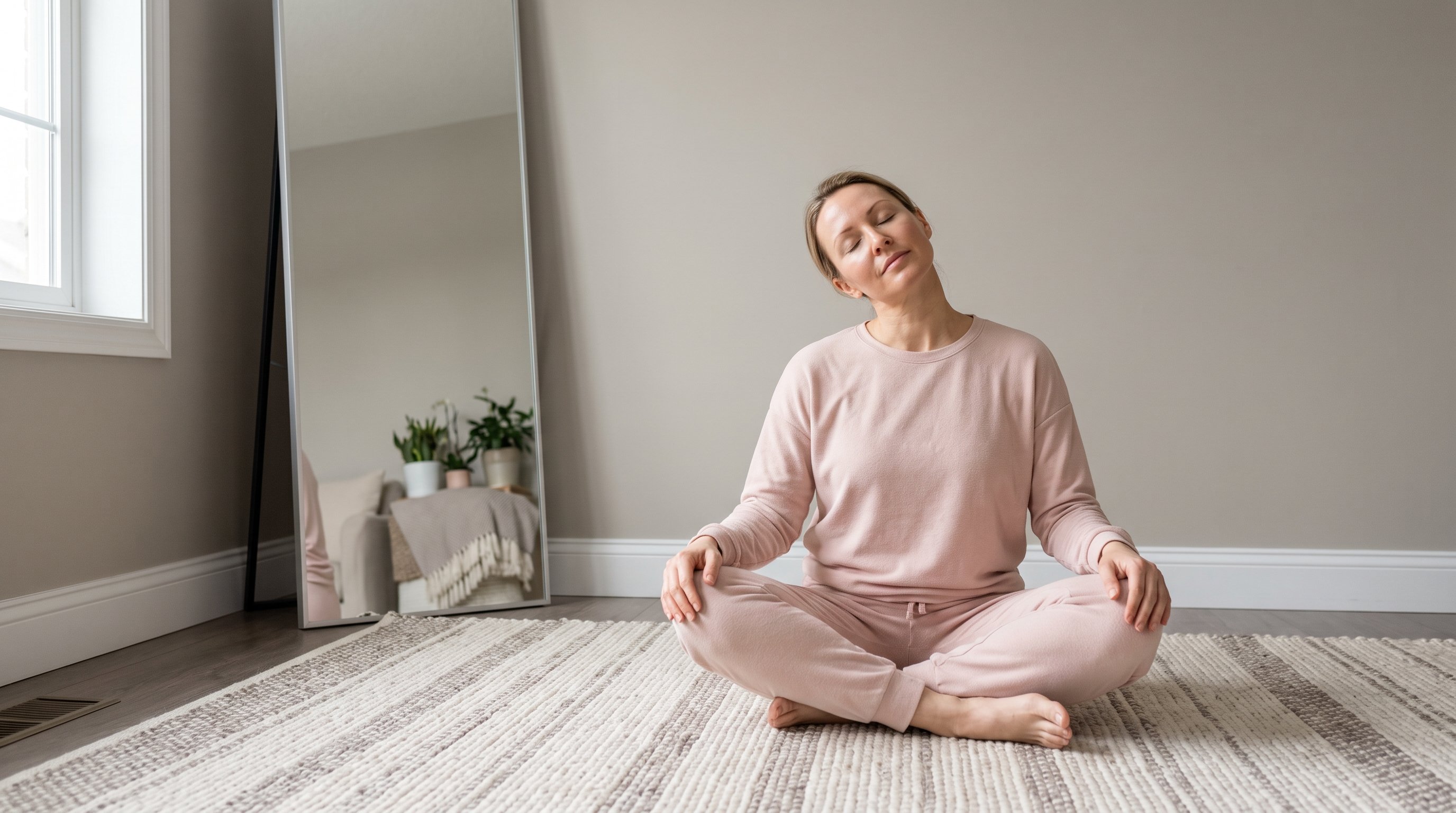
When the bar is low, skipping feels like a bigger decision than just doing it, and that flips the default from avoidance to action.
Over a few months, the person doing small sessions consistently has logged far more total movement than the person waiting for the perfect hour to appear.
Who This Approach Suits and How to Adjust It
If You're Just Starting Out
Pick one time of day and one tiny action, like five minutes of stretching before coffee, and repeat it until it stops feeling like a decision.
If Your Schedule Changes Every Day
Attach the session to something that happens regardless of the day, such as right after brushing your teeth, rather than to a fixed clock time.

If You're Managing Energy Dips or Joint Stiffness
Shorter, gentler sessions done more often tend to be easier to sustain than occasional intense ones, since there is less to recover from between each one.
If You've Started and Stopped Before
Lower the bar further than feels necessary; a session that takes 3 minutes is still a session, and a string of finished 3-minute sessions beats a string of abandoned 40-minute plans.
Fitting a Routine Into a Day That's Already Full
Most packed days are not short on minutes, they are short on decisions already made in advance.
A routine that is already written down and waiting removes the part where you have to think up a workout while tired, which is often the exact moment the whole thing gets abandoned.
This is where Nord Yoga fits into the picture: a tailored face yoga plan and light exercise routine mean the session is already decided before you open the app, so the only remaining choice is whether to press play.
Guided video tutorials and a progress tracker also take away the guesswork of what to do and whether it is working, which keeps the friction low on the days that matter most.
Can Exercise Alone Fix Everything Overnight?
No, and it is worth saying plainly: there is no version of exercise, however consistent, that produces overnight change or targets results to one specific area of the body.
The body does not let you choose where results show up based on which exercise you do, and movement alone moves slowly without a change in what you eat alongside it.
The honest answer is less exciting but more useful: steady sessions, repeated over time, alongside food choices that support the same goal, is the combination that actually holds up.
Anyone promising fast, targeted results from exercise alone is skipping a step that the body simply does not skip.
Making Nord Yoga the Easiest Part of Your Day
If the real obstacle is deciding what to do and whether it is worth the time, Nord Yoga removes both questions before you even sit down.
The app builds a face yoga plan designed around your specific skin concerns, pairs it with a meal plan built around food you already like, and tracks your progress so the small daily session has a visible thread running through it.
Quality video courses walk through each massage technique and exercise step by step, so there is no guessing involved, and the double chin and jawline focused course gives a clear next goal once the basics feel familiar.

Find Your Inner Balance
Flow Through Your Day
Keeping the Routine Going Past the First Month
The single most useful thing anyone can do to stay motivated to exercise is make the next session smaller than they think it needs to be.
Pick one fixed moment in the day, attach a short session to it, and let the streak of finished sessions do the convincing that motivation never quite manages on its own.
Nord Yoga can sit inside that moment as the plan that is already waiting, so the only decision left each day is to show up.
FAQ
There is no fixed number of days that applies to everyone, since it depends on how consistently the sessions get completed. What matters more than counting days is whether the session is still happening most days a few weeks in.
A short session finished is worth more than a long session skipped, since the finished one adds to a total and the skipped one adds to nothing. Frequency across a month tends to matter more than how long any single session runs.
Attach the session to something already happening, like after a meal or before bed, rather than waiting for free time to appear on its own. Even a few minutes counted consistently adds up over weeks in a way one long session never does.
The most common reason is a plan that was too demanding for the actual day being lived, not a lack of willpower. Nord Yoga's shorter, tailored sessions and built-in tracker are designed to keep the bar low enough that stopping takes more effort than continuing.
Share this post