Easy Recipes for Weight Loss: How to Make Meals Stick
By:Author:Nord Yoga Editorial
Updated on:September 30, 2026

- Do Easy Recipes for Weight Loss Actually Work?
- Why This Beats the Harder Alternative
- The Quantity Question: How Many Recipes Do You Need?
- The Practical Question: Making It Stick Week After Week
- Comparison: Cooking From Scratch vs Meal Prep vs Ready Meals
- The Forbidden Promise, Answered Honestly
- Levers That Change the Result
- How Long Until You See Results?
- Your First Four Weeks
- What Stalls Progress
- Why Nord Yoga Works for This
- Final Thoughts
Three easy recipes a week, cooked consistently, will do more for you than thirty recipes you never make. That is the whole idea behind this guide.
Weight change comes down to what you actually eat over time, not what sits saved in a recipe folder. Simple meals you repeat without thinking beat complicated ones you abandon by Wednesday.
This guide covers whether easy recipes really move the needle, how many you need in rotation, a four-week starting plan, and the points where most people quietly stop.
Do Easy Recipes for Weight Loss Actually Work?
The mechanism is plain arithmetic. If your meals give you fewer calories than your body uses across a day, weight tends to trend down over time; if they give you more, it tends to trend up.
Easy recipes work because they are repeatable, and repeatable meals are the ones that actually get cooked instead of skipped for takeaway.
Say a swapped dinner saves you roughly 200 calories compared with a takeaway version. Do that five nights a week and you are looking at 1,000 calories saved across the week, purely from one repeated swap.
That is not a promise about the scale. It is just what the numbers do when a simpler meal replaces a heavier one, night after night.
Why This Beats the Harder Alternative
Elaborate meal plans look impressive on paper. In practice, a recipe with twelve ingredients and four pans gets cooked once and then quietly retired.
An easy recipe with five ingredients and one pan gets cooked again next week, and the week after that.
Adherence is the whole game here. A meal completed on a Tuesday night after work beats a perfect meal that only exists in theory.
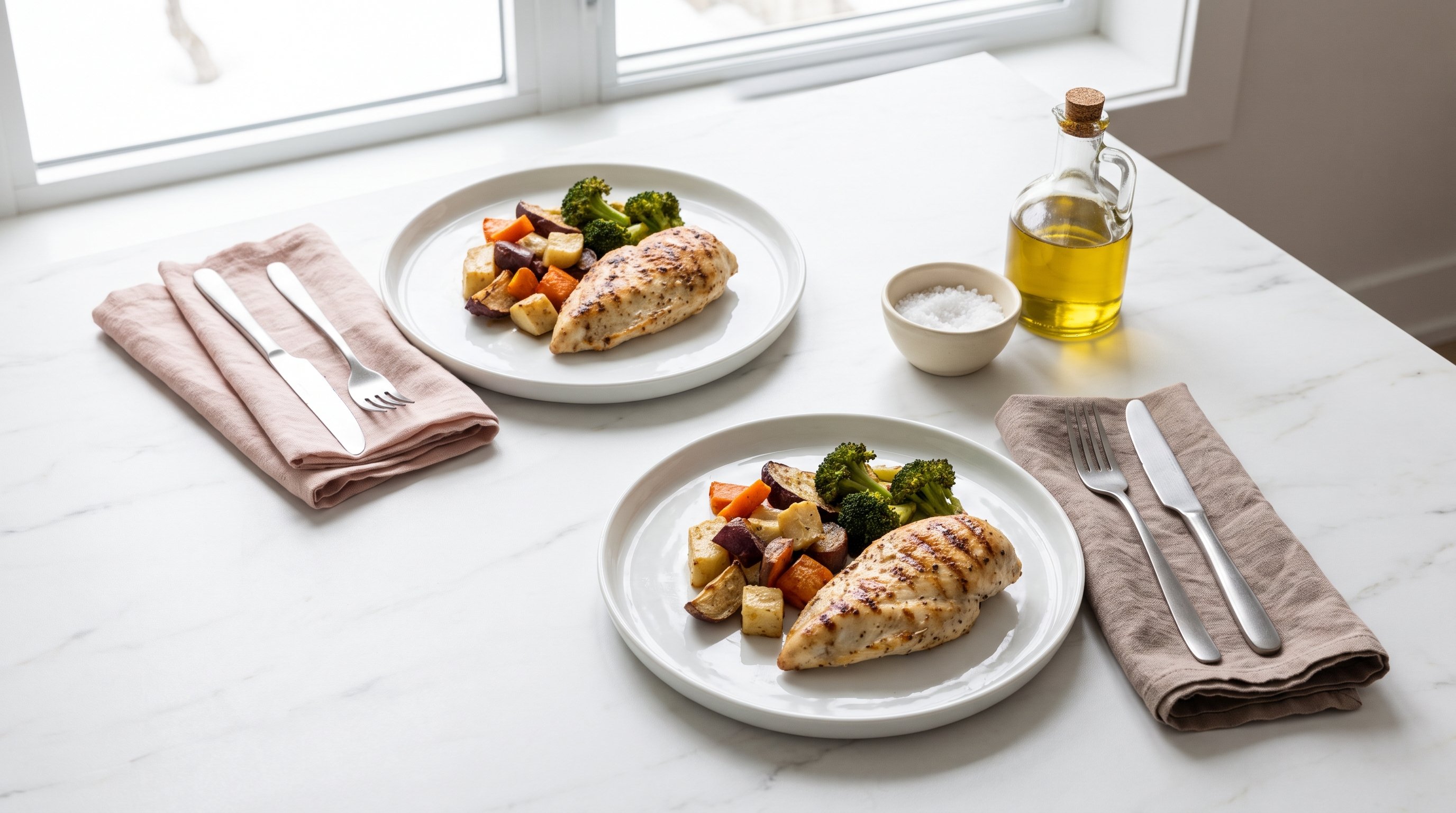
The harder alternative is not wrong, exactly. It is just slower to become a habit, and habits are what actually add up over weeks and months.
The Quantity Question: How Many Recipes Do You Need?
You do not need thirty recipes. You need a small rotation you can cook without thinking, plus one or two you add when you feel like it.
Most weeks run on repetition anyway - the same few breakfasts, a couple of lunches, three or four dinners.
Find Your Own Number
Some people are happy eating the same lunch five days running; others need three dinner options on rotation to stay interested. Start small, count how many meals you actually repeat without getting bored, and build from there.
| Meal | Recipes Needed | How Often |
|---|---|---|
Breakfast | 1 to 2 | Daily |
Lunch | 2 to 3 | 4 to 5 times a week |
Dinner | 3 to 4 | Most nights |
Snacks | 1 to 2 | As needed |
The Practical Question: Making It Stick Week After Week
Knowing which recipes are easy is one thing. Actually cooking them on a Tuesday when you are tired is another.
This is where having a plan sitting in front of you helps, rather than deciding from scratch every evening.
Nord Yoga includes an easy-to-follow meal plan built to match what your skin and body need, so you are not starting from a blank page every week.
Pair that with the app's short face yoga sessions and the whole routine - food and movement - lives in one place instead of three separate habits fighting for your attention.
Comparison: Cooking From Scratch vs Meal Prep vs Ready Meals
Most people are choosing between three broad approaches, and each one has a real cost attached to it - time, money or effort.
| Approach | Time Cost | Ingredient Control | Best For |
|---|---|---|---|
Cook Fresh Nightly | 20 to 30 minutes | Full control | Nights with time |
Batch Cook Sunday | 1 to 2 hours weekly | High control | Busy weekdays |
Simple Repeat Meals | 10 to 15 minutes | Good control | Beginners |
Ready Meals | Minutes | Low control | Emergency backup |
Mixed Approach | Varies | Flexible control | Most real weeks |
The Forbidden Promise, Answered Honestly
No recipe, however easy, targets one body area. Weight change does not work by zone - not the middle, not anywhere specific - and any recipe claiming otherwise is not being straight with you.
There is no overnight version of this either. A single easy dinner does not undo months of eating patterns, and nothing here claims it does.
The honest answer is duller than the promise but it is true: repeated simple meals, eaten consistently over weeks, are what actually shift the numbers.
Levers That Change the Result
Not every choice you make in the kitchen carries equal weight. Some levers move the outcome far more than others.
What Actually Moves the Needle
- How often you cook the easy version - one repeated swap five nights a week beats five different fancy meals cooked once and forgotten.
- Portion size on the plate - the same recipe served in a smaller bowl changes the total calories without changing a single ingredient.
- What sits in the cupboard - meals get easier to choose well when the easy option is the one already in the house.
How Long Until You See Results?
This is where most people quit - somewhere around week two or three, when nothing dramatic has happened yet and the novelty has worn off.
Change from food tends to show up slowly and unevenly, not on a fixed schedule. Clothes fitting differently, or energy feeling steadier through the afternoon, often shows up before the scale agrees with you.
The timeline is genuinely different for everyone, which is frustrating to hear but is the honest version.
Your First Four Weeks
Order matters more here than any specific recipe. Build the habit first, then refine it.
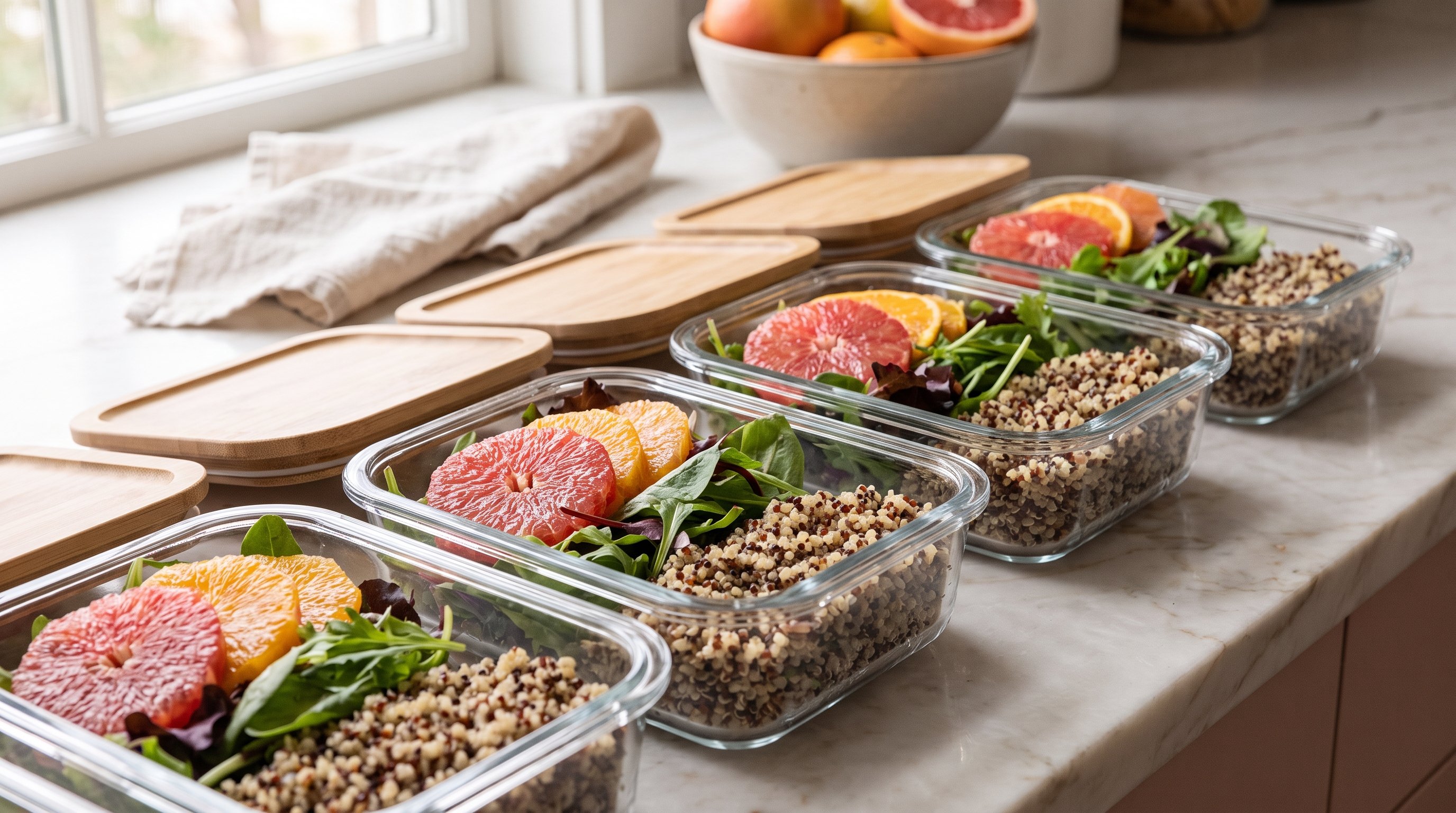
| Week | Focus |
|---|---|
Week 1 | Pick 3 easy recipes to repeat |
Week 2 | Cook the same 3 without changes |
Week 3 | Add one new easy recipe |
Week 4 | Notice which meals you skip and why |
What Stalls Progress
Recipe Overload
Saving forty recipes and cooking none of them is common. Pick three, cook them properly, and let the collection grow slowly from there.
No Plan for Tired Evenings
The easiest recipe in the world still fails if there is no plan for the night you are exhausted. Keep one back-up meal that needs almost no thought.
Portion Drift
An easy recipe eaten in a double portion loses most of its benefit. Serve it the same way each time rather than guessing.
Treating One Bad Day As Failure
One takeaway night does not undo three weeks of simple cooking. Go back to the rotation the next day and carry on.
Ignoring Movement Entirely
Food changes alone move slowly without any movement alongside them. Short, consistent sessions - even a few minutes daily - support the same consistency this guide keeps coming back to.
Why Nord Yoga Works for This
This guide keeps repeating one idea: consistency beats intensity. Sessions completed matter more than how hard any single session is.
Nord Yoga is built around that same principle - short, easy-to-follow face yoga sessions, a meal plan tailored for you, and a progress tracker that keeps the whole routine in one place instead of scattered across notebooks and apps.
The Double Chin Remover course and guided video tutorials mean you are never guessing what to do next, which is exactly the kind of friction that stops routines from sticking.
Final Thoughts
Easy recipes for weight loss are not a shortcut, they are just realistic - meals simple enough that you actually cook them, week after week, instead of once and never again.
Start with three, repeat them without guilt, and let a tool like Nord Yoga handle the meal planning and short daily sessions so the decision fatigue disappears from your evenings.
FAQ
Home-cooked simple meals are usually cheaper per portion than takeaway, since you are buying raw ingredients rather than paying for preparation and packaging. The exact saving depends on what you cook and where you shop, but repeated home cooking tends to add up in your favour over a month.
A genuinely easy recipe should take about the same time as waiting for a delivery, once you count the ordering and the wait. The effort drops further once you repeat the same three or four meals, because the decision-making disappears after the first week.
Easy recipes are chosen precisely because they need minimal skill - one pan, a handful of ingredients, few steps to get wrong. Start with the simplest option on your list and treat the first few attempts as practice, not a test.
Boredom with the same few meals and no plan for tired evenings are the two most common reasons people stop. Rotating in one new easy recipe every few weeks, and pairing meals with something like Nord Yoga's short daily sessions, keeps the routine feeling manageable instead of like another chore.
Share this post