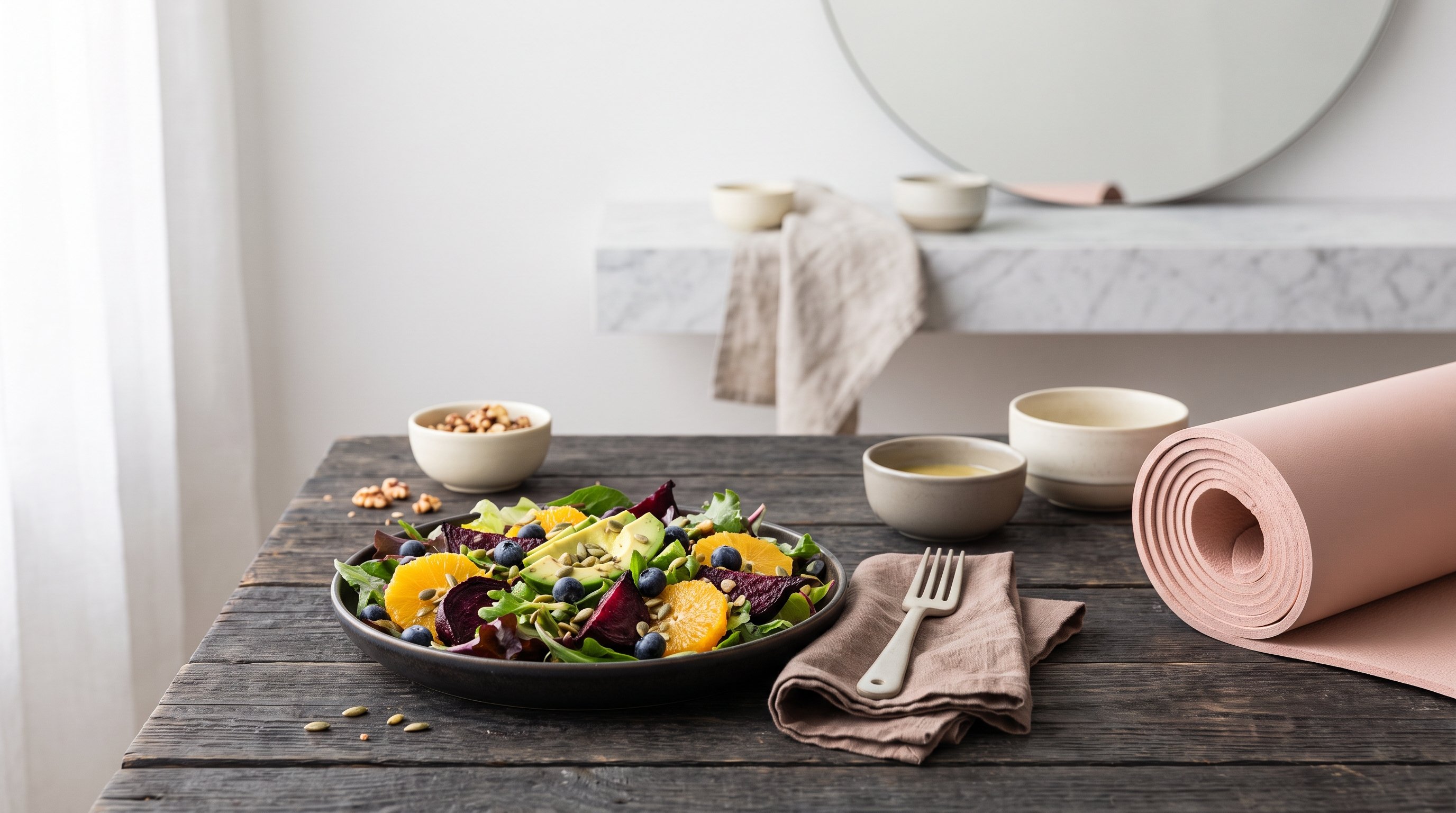
High Fiber Breakfast Foods: A Practical Morning Guide
By:Author:Nord Yoga Editorial
Updated on:September 30, 2026

- Does a High Fiber Breakfast Actually Work?
- Why This Beats the Harder Alternative
- The Quantity Question: How Much Fiber Do You Need at Breakfast?
- The Practical Question: How Do You Actually Fit This In?
- Comparison: Whole Foods Versus Fiber Supplements
- The Forbidden Promise, Answered Honestly
- Levers That Change the Result
- How Long Until You See Results?
- Your First Four Weeks
- What Stalls Progress
- Why Nord Yoga Works for This
- Final Thoughts
A breakfast with around 8-10 grams of fibre can carry you through the morning without the mid-morning energy dip that a bowl of plain cereal often leaves behind.
Fibre slows digestion, so food moves through the gut at a steadier pace and you feel fuller for longer - that is the whole mechanism, nothing more mysterious than that.
This guide covers whether high fibre breakfasts actually work, how much fibre to aim for, what a realistic first month looks like, and where most people quietly fall off the plan.
Does a High Fiber Breakfast Actually Work?
Fibre is not digested the way sugar or refined starch is. It passes through the gut more slowly, which is why a bowl of oats sits with you longer than a bowl of cornflakes made from the same amount of grain.
Do the arithmetic on a typical morning: a slice of white toast has close to 0-1 grams of fibre, while the same amount of wholegrain toast can carry 2-3 grams.
Swap that one slice and add a handful of berries or a spoon of chia seeds, and you can reasonably reach 8-10 grams before 9am without changing your whole diet.
None of this is about burning fat from any one part of the body - fibre does not work that way, and nothing you eat at breakfast targets a specific area.
Why This Beats the Harder Alternative
The harder alternative is tracking every gram of everything you eat all day, which sounds thorough but rarely survives a busy Tuesday.
A high fibre breakfast is a single decision made once a day, at the same time, before the day gets noisy - that is a habit you can actually keep.
Fewer decisions mean fewer chances to skip the plan entirely, and a plan you stick with beats a stricter one you abandon by Thursday.
The same logic applies to any habit worth keeping: sessions completed matter more than how intense any single one is.
The Quantity Question: How Much Fiber Do You Need at Breakfast?
There is no single correct number, but a useful working target for one meal is somewhere between 7 and 12 grams, roughly a third of a reasonable daily total.
Oats, wholegrain bread, chia seeds, berries, and beans all contribute differently, so the number depends entirely on what is actually on your plate.
Find Your Own Number
Start by checking the fibre content on whatever you already eat most mornings, then add one high fibre food until you land somewhere in the 7-12 gram range.
The table below is a starting point you can apply today without buying anything new.
| Food | Approx Fibre |
|---|---|
Rolled oats, 40g dry | 4 grams |
Wholegrain toast, 1 slice | 2-3 grams |
Chia seeds, 1 tablespoon | 5 grams |
Raspberries, 1 cup | 8 grams |
Banana, medium | 3 grams |
The Practical Question: How Do You Actually Fit This In?
Knowing the numbers is one thing - building a breakfast you will actually make on a rushed weekday morning is another.
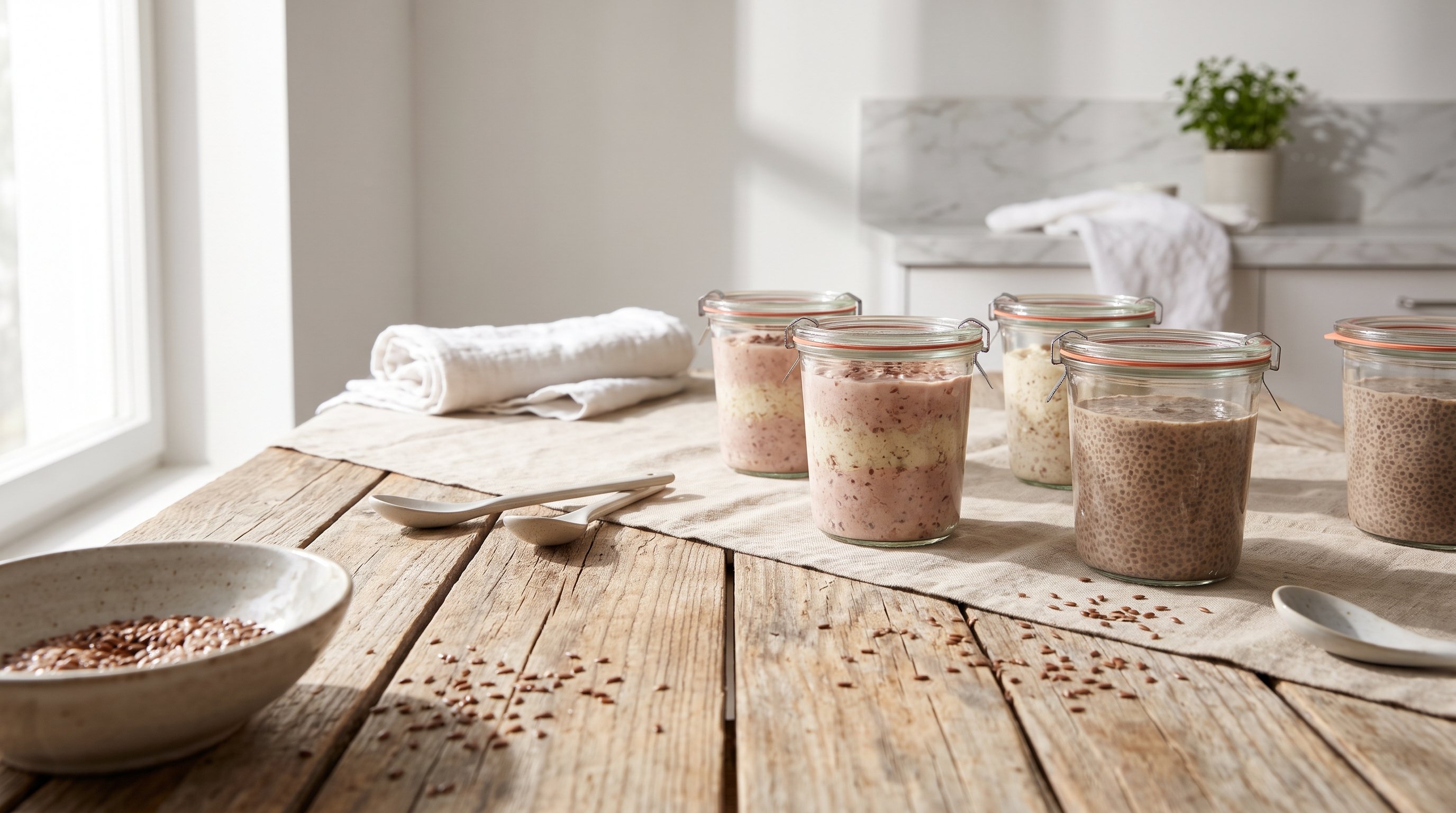
Batch-prepping oats or overnight jars on a Sunday removes the decision entirely from busy mornings, which is where most food plans quietly fail.
If mornings feel like the hardest part of any routine, an easy-to-follow personal meal plan through Nord Yoga is built around food you already like, so a high fibre breakfast fits into a wider plan instead of sitting apart from it.
Pairing that with progress trackers means you can see the small changes add up without needing to remember every number yourself.
Comparison: Whole Foods Versus Fiber Supplements
The decision most people weigh is whether to get fibre from actual food or reach for a supplement instead.
Both can raise your fibre number, but they do it differently, and the table below lays out the practical differences.
| Option | Fibre | Cost | Extra Nutrients | Effort |
|---|---|---|---|---|
Wholegrain oats | 4g per 40g | Low | Protein, slow carbs | Needs cooking |
Chia seeds | 5g per tbsp | Low | Omega fats | No cooking |
Berries | 3-8g per cup | Medium | Vitamins | No prep |
Wholegrain bread | 2-3g per slice | Low | Convenient | Toast and go |
Fibre supplement | Varies by brand | Medium | None added | Mix and drink |
The Forbidden Promise, Answered Honestly
No breakfast, however high in fibre, targets fat on the stomach, face, or anywhere else - the body does not lose weight from one spot on command.
There is also no version of this where you wake up looking different the next morning; that is not how digestion or metabolism works.
What a high fibre breakfast honestly offers is steadier energy and fuller mornings, which makes it easier to stick with better choices across the rest of the day.
That knock-on effect, repeated daily, is the real and unglamorous mechanism behind any change people notice over time.
Levers That Change the Result
Not every change carries equal weight - some levers move the needle far more than others.
Levers Worth Pulling First
- Consistency over quantity - a moderate fibre breakfast eaten daily beats a huge one eaten twice a week.
- Water alongside fibre - fibre needs fluid to do its job well, so a glass of water with breakfast matters more than people expect.
- Variety across the week - rotating oats, wholegrain bread, seeds and fruit avoids the boredom that quietly ends most food habits.
How Long Until You See Results?
This is where most people quit - expecting a dramatic shift in the first few days and feeling let down when mornings just feel ordinary.
The honest answer is that steadier energy and fuller mornings tend to show up gradually as the habit becomes routine, not on a fixed schedule.
Give the habit time to become automatic before judging whether it is working, rather than measuring it day by day.
Your First Four Weeks
The order of these steps matters more than the exact numbers - build the habit before you optimise it.

| Week | Focus | Goal |
|---|---|---|
Week 1 | Swap one item | Add 2-3g fibre |
Week 2 | Add a fruit or seed | Reach 6-8g fibre |
Week 3 | Prep breakfast ahead | Remove decision fatigue |
Week 4 | Rotate three options | Avoid repetition fatigue |
What Stalls Progress
Skipping Breakfast on Busy Mornings
Prep the night before so there is nothing left to decide when you are rushing out the door.
Eating the Same Thing Every Day
Rotate two or three options so the habit does not quietly become boring enough to drop.
Adding Fibre Without Adding Water
Keep a glass of water alongside breakfast so the extra fibre moves through comfortably.
Chasing a Big Number Instead of a Steady One
A moderate fibre breakfast eaten daily beats an extreme one eaten occasionally.
Expecting Quick Visible Change
Judge the habit by how mornings feel over weeks, not by how the mirror looks the next day.
Why Nord Yoga Works for This
A high fibre breakfast is one small daily decision, and Nord Yoga is built around the same idea - small, repeatable steps that fit into a real morning.
The easy-to-follow personal meal plan pairs breakfast choices with your wider skin and wellness goals, while progress trackers keep the small wins visible so the habit feels worth repeating.
Final Thoughts
A high fibre breakfast is not a dramatic fix, and it was never meant to be - it is a small, steady habit that makes the rest of the day a little easier to manage.
Start with one swap tomorrow morning, and if you want the rest of your routine built around the same steady logic, Nord Yoga is designed to make that easier.
FAQ
Somewhere around 7-12 grams is a reasonable target for one meal, roughly a third of a sensible daily total. The exact number depends on what you eat the rest of the day.
Fibre does not target fat anywhere on the body, and there is no weight figure worth promising here. What it does offer is fuller mornings, which can make other food choices easier to stick with.
Overnight oats, chia pots and pre-sliced fruit can all be prepped the night before with no cooking needed in the morning. The habit only needs to survive your actual schedule, not an ideal one.
Boredom and repetition are the usual culprits, not lack of willpower. Rotating a few options, and pairing the habit with something like the Nord Yoga meal plan, helps keep it from feeling like a chore.
Share this post