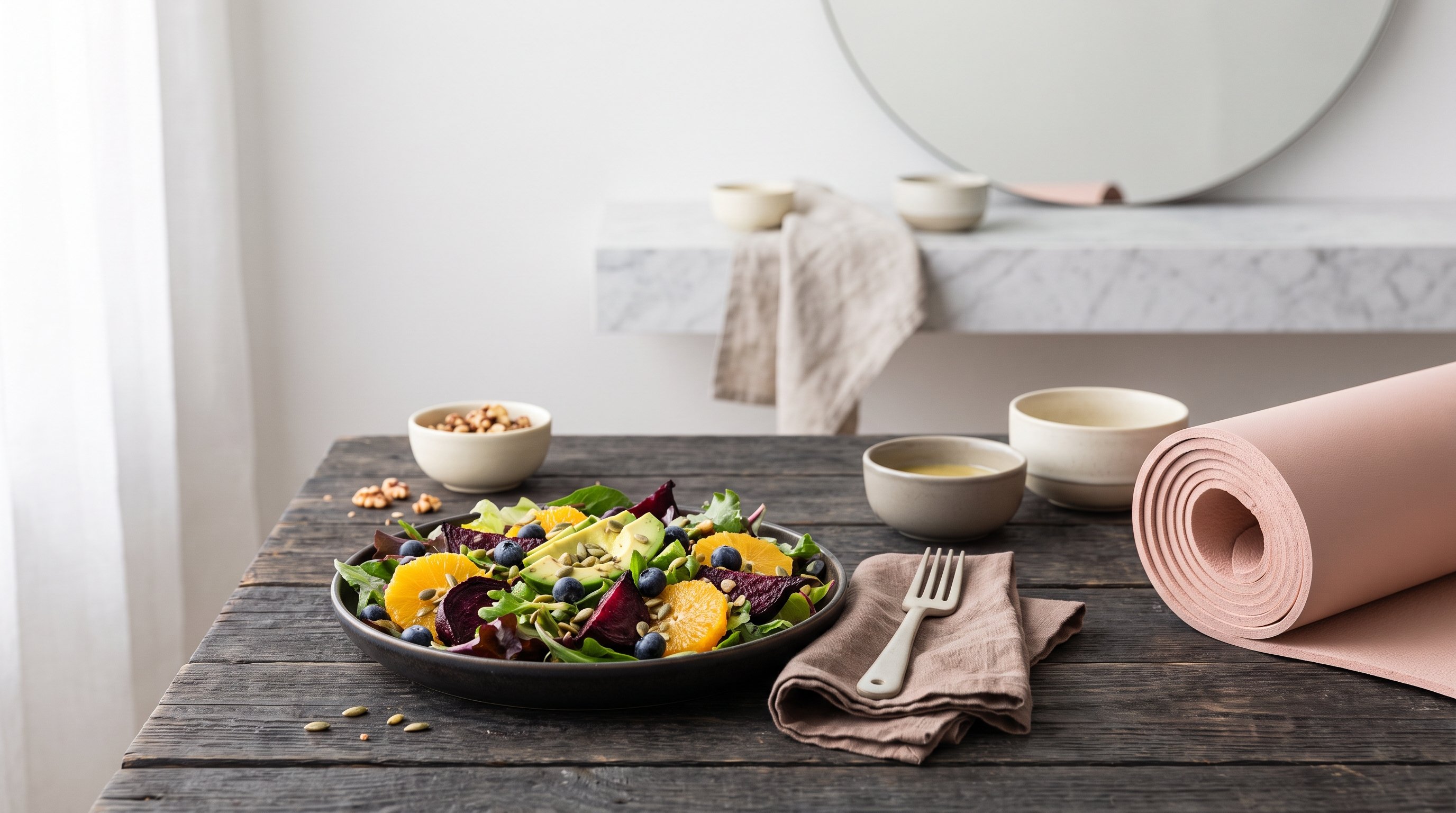
Foods to Lower Your Cortisol: A Steady Meal Routine
By:Author:Nord Yoga Editorial
Updated on:September 30, 2026

- Do Foods to Lower Your Cortisol Actually Work?
- Why This Beats the Harder Alternative
- The Quantity Question: How Much, How Often?
- The Practical Question: How Do You Actually Do This?
- Comparison: Steady Meals vs Skipping Meals Under Stress
- The Forbidden Promise, Answered Honestly
- Levers That Change the Result
- How Long Until You See Results?
- Your First Four Weeks
- What Stalls Progress
- Why Nord Yoga Works for This
- Final Thoughts
One plate of food will not fix a stressful week, but the pattern of what's on that plate over weeks can shift how your body handles stress. Cortisol is a hormone your body releases in response to physical and mental stress, and what you eat plays a part in how steady or spiky that response is.
The mechanism is simple to follow: blood sugar swings from sugary, low-fibre meals ask your body to release stress hormones to manage the crash, while steadier meals with protein, fibre and healthy fats don't ask as much of that system.
This guide covers whether food-based cortisol support actually works, how much change is realistic, what to eat and when, and where movement and rest fit into the bigger picture.
Do Foods to Lower Your Cortisol Actually Work?
The honest answer is that food nudges the system rather than switching it off. Your body still needs to respond to real stress - a deadline, a bad night's sleep, an argument - and no meal removes that need.
What food can do is reduce one extra source of hormonal spiking: the blood sugar rollercoaster. If breakfast is just refined carbohydrate, blood sugar rises fast and falls fast, and that fall is itself a stressor your body has to manage.
Swap that meal for one with protein, fibre and fat, and the rise and fall flattens out. Fewer spikes across a day means fewer moments where your body reaches for its stress-response machinery just to keep blood sugar level - simple arithmetic on fewer swings, not a claim about lower cortisol numbers.
Why This Beats the Harder Alternative
The harder alternative is trying to eliminate stress itself - quitting a demanding job, avoiding every difficult conversation, controlling every variable. That's not realistic for most people, and chasing it tends to just add more stress.
Adjusting meals is a smaller, repeatable action. You don't need to overhaul your life, you need to eat breakfast with some protein in it instead of just toast and jam.

Small, repeatable choices beat big, unsustainable ones because you actually keep doing them. A meal swap you can manage on a busy Tuesday will always outperform a strict protocol you abandon by Thursday.
The Quantity Question: How Much, How Often?
There's no single number of grams or servings that applies to everyone, because body size, activity levels and stress load all differ. What matters more is the pattern across a day: are most meals balanced, or are most meals just carbohydrate on its own?
A useful starting frame is three balanced meals a day, each with a protein source, a fibre source and some healthy fat, rather than counting exact quantities.
Find Your Own Number
Start by noticing how you feel two to three hours after a meal - shaky, foggy or suddenly starving usually means that meal was too carbohydrate-heavy on its own. Adjust the next similar meal by adding a protein or fat source and see if that gap smooths out.
| Meal | What To Add | Why It Helps |
|---|---|---|
Breakfast | Eggs or Greek yoghurt | Protein slows sugar rise |
Lunch | Leafy greens or beans | Fibre steadies digestion |
Snack | Nuts or seeds | Fat blunts sharp spikes |
Dinner | Oily fish or olive oil | Supports evening calm |
The Practical Question: How Do You Actually Do This?
Knowing the theory is one thing, building the habit into an already busy day is another. Most people don't fail because they don't know eggs beat pastries, they fail because nobody plans the eggs the night before.
This is where having a meal plan built around food you already like removes the daily decision fatigue. Nord Yoga includes an easy-to-follow meal plan tailored for you, so instead of guessing what a balanced plate looks like at 7am, it's already mapped out alongside light daily movement.
Pairing a steadier eating pattern with a few minutes of gentle movement each day gives your body two calming inputs instead of one, which is a more realistic way to support how you feel day to day.
Comparison: Steady Meals vs Skipping Meals Under Stress
When life gets busy, meals are often the first thing to slip - skipped, rushed or replaced with whatever's fastest. Here's how that choice tends to play out over a day.
| Choice | Likely Effect |
|---|---|
Skipping breakfast | Bigger blood sugar swings later |
Balanced breakfast | Steadier energy into lunch |
Sugary snack under stress | Quick spike, quick crash |
Protein and fibre snack | Slower, steadier release |
Late heavy dinner | Digestion competes with rest |
None of this is about perfection every single day. It's about which pattern you lean towards most of the time.
The Forbidden Promise, Answered Honestly
No food lowers cortisol only in one area of the body, and no food removes stress overnight. The body does not work by targeting a single hormone in isolation while leaving everything else untouched.
There's no cure here, no guarantee, and no meal plan that eliminates stress from your life. What's real is smaller and more useful: steadier meals give your body one less thing to react to, which can make the day feel a little more manageable over time.
Levers That Change the Result
A few factors matter more than the rest regarding how food and stress interact.
What Actually Moves the Needle
- Meal timing consistency - eating at roughly similar times each day gives your body a predictable rhythm to work with.
- Balanced macronutrients - protein, fibre and fat together slow digestion and smooth out blood sugar swings.
- Sleep quality - poor sleep raises how reactive your body is to stress the next day, regardless of what you eat.
How Long Until You See Results?
This isn't a fast process, and anyone promising a quick fix is skipping the honest part. Most people notice changes in energy and mood before they notice anything else, and that usually comes from sticking with steadier meals for a while, not from any single day of eating well.

The point where people tend to quit is around the second week, when the novelty wears off and old habits feel easier. Getting past that point is less about willpower and more about having the next meal already planned.
Your First Four Weeks
Order matters here more than exact numbers - building the habit before chasing perfection.
| Week | Focus |
|---|---|
Week 1 | Add protein to breakfast |
Week 2 | Build a fibre-rich lunch |
Week 3 | Swap sugary snacks for nuts |
Week 4 | Steady dinner timing |
What Stalls Progress
Skipping Meals When Busy
The busier the day, the easier it is to skip a meal, but that's exactly when blood sugar swings do the most damage to your steadiness. Keep something simple and portable on hand for those days.
Relying on Caffeine Instead of Food
Coffee can mask hunger and tiredness without addressing either, which often leads to a bigger crash later. Pair caffeine with an actual meal rather than using it as a replacement.
All-Or-Nothing Thinking
One imperfect meal doesn't undo the pattern, but treating it that way often leads to giving up entirely. Just return to the next meal and carry on.
Ignoring Sleep and Movement
Food is only one part of the picture, and poor sleep or no movement can outweigh even a great diet. Treat them as a package, not separate projects.
No Plan for the Week Ahead
Without a rough plan, default choices tend to be quick and sugary out of convenience. A little planning ahead of time removes that decision under pressure.
Why Nord Yoga Works for This
Steadier eating works best alongside steadier habits overall, and that's where consistency beats intensity every time. Nord Yoga brings together a tailored meal plan, light daily face yoga sessions and a progress tracker, so the food side and the movement side sit in one place instead of scattered across different apps and good intentions.
Completing a few minutes of guided sessions most days, alongside meals that don't spike and crash, gives your body two steadying inputs it can actually keep up with.
Final Thoughts
Food won't erase stress, but steadier meals give your body fewer extra reasons to react. Start with one meal, probably breakfast, and build from there rather than trying to change everything at once.
If you want that eating pattern paired with a few minutes of daily movement in one simple routine, Nord Yoga brings both together without asking for a big time commitment.
FAQ
There isn't one single food that does this on its own, no matter how it's marketed. The bigger factor is the overall pattern - balanced meals across the day - rather than any one ingredient.
No, this isn't about cutting foods out or counting every gram. It's about adding protein, fibre and fat alongside what you already eat so meals feel steadier.
A balanced breakfast doesn't need to be elaborate - yoghurt with nuts or eggs prepped the night before both work. The goal is consistency, not complexity.
One missed meal or one bad week doesn't undo the pattern you're building. Nord Yoga's tracker can help you see the bigger picture over weeks rather than judging any single day.
Share this post