Foods That Cause Inflamation: What To Know And What To Do
By:Author:Nord Yoga Editorial
Updated on:September 30, 2026

- Does Cutting Inflammatory Foods Actually Work?
- Why This Beats the Harder Alternative
- The Quantity Question: How Much Is Too Much?
- The Practical Question: What Do You Actually Eat?
- Comparison: Cutting Foods Out vs Swapping Them In
- The Forbidden Promise, Answered Honestly
- Levers That Change the Result
- How Long Until You See Results?
- Your First Four Weeks
- What Stalls Progress
- Why Nord Yoga Works for This
- Final Thoughts
Some foods keep low-grade inflammation ticking over longer than others - think heavily refined oils, sugary drinks, and ultra-processed snacks eaten most days of the week.
The mechanism is simple: certain foods feed the processes your body uses to repair and defend itself, and eating them constantly gives those processes little downtime.
This guide covers which foods tend to be the main offenders, how much it actually matters, how to swap without overhauling your whole kitchen, and where a face yoga and nutrition habit fits into the picture.
Does Cutting Inflammatory Foods Actually Work?
Your body runs a constant background process of repair and defence, and that process uses inflammation as one of its tools.
Short bursts of inflammation are normal and useful - it's what happens after a workout or a small cut.
The issue is foods that keep that process switched on for longer than it needs to be, day after day, without much recovery time in between.
Do the arithmetic on a typical week: if someone eats fried food, sugary drinks or heavily processed snacks at most meals, that's 15-20 opportunities a week to keep the background hum going.
Swap even half of those for whole foods and vegetables, and you've cut the frequency in half - not the drama, just the maths.
That's the honest version: it's not about one bad meal, it's about the pattern across the week.
Why This Beats the Harder Alternative
Nobody keeps up a diet that demands perfection, and elimination-style eating plans tend to fail for exactly that reason.
Swapping a few repeat offenders is a habit you can actually keep going, and a habit you keep going beats a plan you abandon in week two.
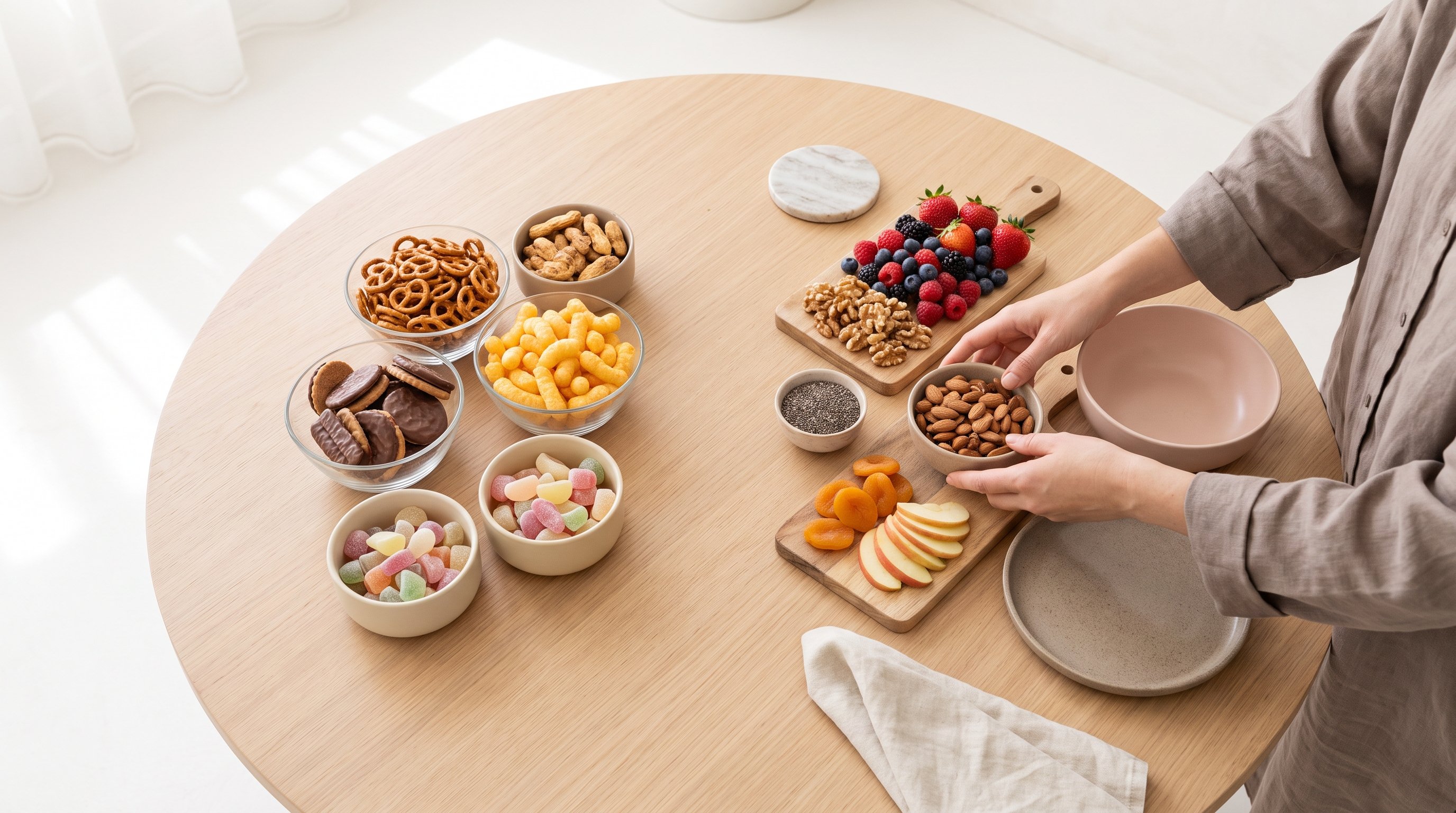
Consistency is unglamorous and it wins anyway - the person who swaps sugary drinks for water four days out of seven, every week, will outpace the person who goes fully clean for three days and quits.
Small, repeatable swaps also fit into a normal week - work, family, social meals - without requiring anyone to explain their eating habits to a room full of people.
The Quantity Question: How Much Is Too Much?
There's no single number that applies to everyone, because bodies, activity levels and existing habits all vary.
What matters more is frequency - how many days a week a food shows up, not whether it appears once at a birthday party.
Find Your Own Number
Count how many meals this week included fried food, sugary drinks or heavily processed snacks, then try to shave that number down by even two or three meals next week.
That's a number you can track without an app, a scale or a food diary - just a rough tally at the end of the week.
| Food | Typical Frequency | Simple Swap |
|---|---|---|
Fried food | Most days | Baked or grilled |
Sugary drinks | Daily | Water or herbal tea |
Refined white bread | Most meals | Wholegrain bread |
Processed snacks | Several times daily | Nuts or fruit |
Sugary desserts | Daily | Berries or yoghurt |
The Practical Question: What Do You Actually Eat?
Knowing which foods to cut back on is one thing - building meals around that knowledge, day after day, is the part that actually takes effort.
Most people don't fail because they don't know sugary drinks aren't great - they fail because nobody hands them an easy meal to eat instead.
This is where a meal plan built around food you already like helps, because it removes the daily decision-making that wears people down.
A meal planning app designed around skin concerns pairs food choices with face yoga and skincare routines already in the application, so the nutrition side doesn't feel like a separate project.
Comparison: Cutting Foods Out vs Swapping Them In
Most people weigh up two approaches: cut inflammatory foods out entirely, or swap them for something better most of the time.
One demands willpower every single day, the other just asks for a slightly better default.
| Approach | Daily Effort | Dropout Risk | Fits Daily Life |
|---|---|---|---|
Full elimination | High | High | Disruptive |
Gradual swaps | Low to moderate | Low | Fits normal routine |
Meal plan support | Low | Low | Removes daily decisions |
No change at all | None | None | Pattern continues |
Occasional tracking | Moderate | Moderate | Requires consistency |
The Forbidden Promise, Answered Honestly
No food swap targets one area of the body, and nothing here reduces puffiness or fullness in just the face or just the stomach.
The body doesn't work that way - it doesn't let you choose where a change shows up first.
There's also no overnight fix, and nothing here cures or reverses anything.
The honest answer is that dietary patterns change slowly, across weeks and months, and the real goal is a pattern you can sustain rather than a result you can schedule.
Levers That Change the Result
Some changes matter more than others, and it helps to know which ones to prioritise first.
What Moves the Needle Most
- Frequency over restriction - cutting how often inflammatory foods appear each week matters more than banning them outright.
- Consistency across weeks - one clean week followed by three messy ones won't add up to much; steady small changes do.
- Hydration alongside food choices - swapping sugary drinks for water is one of the simplest frequency changes available.
How Long Until You See Results?
This is where most people quit - they expect a visible shift within days and give up when it doesn't arrive.
Dietary patterns work on a slower timeline than that, and it's genuinely hard to say exactly when any one person will notice a difference.
What's more useful is tracking the habit itself - how many meals this week were swaps rather than repeats - because that number is something you control today.
Your First Four Weeks
Order matters here more than exact numbers - start with the easiest swap and build from there.

| Week | Focus |
|---|---|
Week 1 | Swap sugary drinks for water |
Week 2 | Add one vegetable to two meals daily |
Week 3 | Swap one processed snack for nuts or fruit |
Week 4 | Reduce fried food to twice a week |
What Stalls Progress
Trying to Change Everything at Once
Swapping ten habits in one week rarely lasts - pick one swap, keep it going, then add the next.
No Plan for Social Meals
Restaurants and gatherings derail good intentions fast, so plan for one flexible meal a week rather than treating every outing as a failure.
Skipping Meals Then Overcorrecting
Skipping meals often leads to reaching for the fastest processed option later, so keeping regular meal times reduces that pressure.
No Simple Go-To Meals
Without a few easy swaps ready to go, old habits fill the gap by default - having two or three go-to meals removes that decision entirely.
Judging Progress Day to Day
Daily ups and downs are normal and don't reflect the weekly pattern - checking in weekly instead of daily keeps frustration down.
Why Nord Yoga Works for This
Nord Yoga pairs a meal plan tailored to skin concerns with face yoga routines, so nutrition and skin care sit in the same daily habit instead of two separate projects.
The app also includes progress trackers, so the small weekly swaps from this guide have somewhere to be logged and reviewed.
For anyone trying to build a routine around fewer inflammatory foods, having the meal plan, the face yoga sessions and the tracker in one place removes a good chunk of the daily decision-making that usually causes people to drop off.
Final Thoughts
Cutting back on foods that cause inflamation isn't about strict rules - it's about noticing the pattern across a week and nudging it in a better direction.
Start with one swap, keep it going, and let Nord Yoga handle the meal planning and tracking while you focus on staying consistent.
FAQ
Fried food, sugary drinks, refined white bread, and heavily processed snacks are the most common repeat offenders when eaten most days of the week. It's the frequency that matters, not any single meal.
No - full elimination is harder to sustain and isn't necessary. Reducing how often these foods appear each week tends to work better long term than banning them outright.
A meal plan built around food you already like removes most of the daily planning, which is often the real barrier. Nord Yoga's meal plan feature is designed to fit into an existing routine rather than replace it.
Most people expect visible change fast and quit when it doesn't show up on schedule. Tracking the habit itself - how many swaps happened this week - keeps motivation tied to something you control.
Share this post