Foods to Boost Your Lymphatic System: How to Support Fluid Movement
By:Author:Nord Yoga Editorial
Updated on:September 30, 2026
- Do Foods to Boost Your Lymphatic System Actually Work?
- Why This Beats the Harder Alternative
- The Quantity Question: How Much, How Often
- The Practical Question: Fitting This Into a Real Week
- Comparison: Food Choices for Lymphatic Support
- What About Fast Results or Targeted Detox?
- Levers That Change the Result
- How Long Until You See Results?
- Your First Four Weeks
- What Stalls Progress
- Why Nord Yoga Works for This
- Final Thoughts
The lymphatic system moves fluid through roughly 600 lymph nodes in the human body, and what you eat plays a real part in how well that fluid moves. Food alone will not do the job, but the right choices give the system less to fight against.
Lymph fluid depends on movement, hydration and low inflammation to flow properly, since it has no pump of its own like the heart. Food affects two of those three things directly: hydration levels and how much inflammatory load the body carries at any given time.
This guide covers which foods actually help, how much you realistically need, and where the idea starts to get oversold. It also looks at how movement and nutrition work together, and where face yoga fits into the bigger picture.
Do Foods to Boost Your Lymphatic System Actually Work?
The mechanism is simple: lymph fluid is mostly water, so dehydration thickens it and slows drainage.
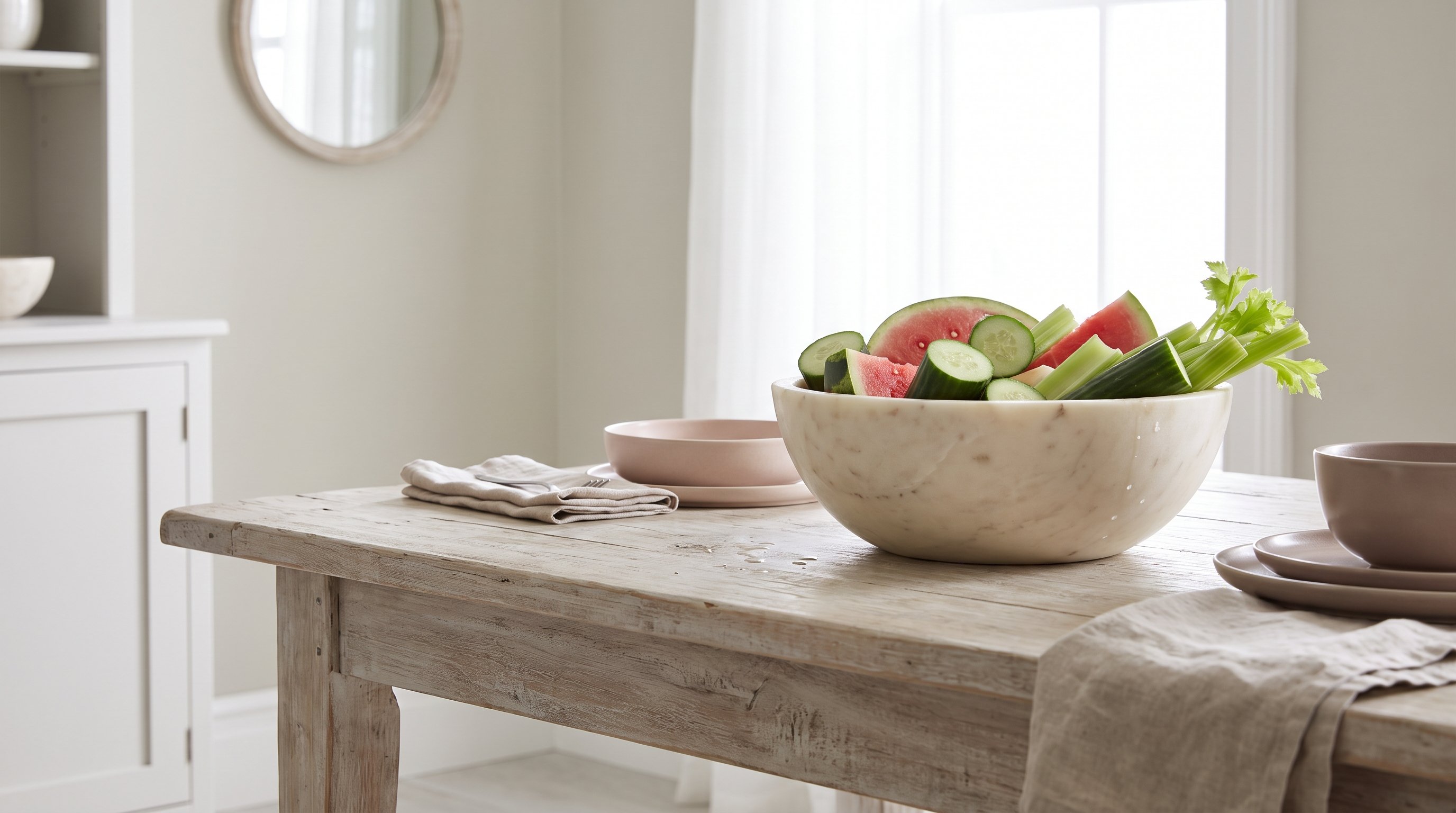
Water-rich foods, like cucumber, watermelon and citrus, contribute directly to fluid intake, while foods high in sodium tend to pull water into tissue and make drainage sluggish. Fibre-rich foods support digestion, and a digestive system under less strain leaves more capacity for lymphatic function elsewhere in the body.
Here's the honest arithmetic: if a standard glass of water is roughly 250mL, and a target daily intake sits somewhere around 2 litres, that's about 8 glasses from fluids alone, before food-based water even counts.
Eating a cucumber or an orange adds a small amount of extra fluid on top of that, useful, but not a replacement for actual water intake.
So the food side works as a support mechanism, not a standalone fix. Pairing water-rich, low-sodium foods with regular movement gives the lymphatic system the conditions it needs to do what it already does.
Why This Beats the Harder Alternative
The harder alternative is a strict detox plan or an elimination diet that's difficult to sustain past a week or two.
Swapping a few high-sodium snacks for water-rich fruit and vegetables is a change most people can keep up for months, not days. Adherence beats intensity almost every time, because a moderate habit repeated daily outperforms a strict habit abandoned by week three.
Think of it as a low-friction swap rather than a diet overhaul. Add water-rich foods to meals already on the table instead of rebuilding the whole plate.
That's the difference between a plan you follow for a month and one you follow all year.
The Quantity Question: How Much, How Often
There's no single magic number here, but a workable target is one water-rich food with most meals and a reduced-sodium approach most days of the week.
Three meals a day, each with one lymph-friendly addition, adds up to roughly 21 small choices a week, far more realistic than one big dietary overhaul.
Find Your Own Number
Start with what fits current meals rather than forcing a new routine from scratch. If breakfast already includes fruit, that's one of the three daily additions already covered.
| Meal | Add This | Simple Swap |
|---|---|---|
Breakfast | Citrus or berries | Reduce added sugar |
Lunch | Leafy greens | Skip processed meat |
Snack | Cucumber or celery | Skip salted crisps |
Dinner | Steamed vegetables | Reduce added salt |
The Practical Question: Fitting This Into a Real Week
Knowing which foods help is one thing, remembering to actually eat them across a busy week is another.
A meal plan built around food you already like removes the guesswork, since the choices are made once instead of three times a day. This is where a tailored meal plan inside a wellness app can help, pairing skin-focused nutrition guidance with the same consistency approach used in face yoga routines.
The goal is the same either way: fewer decisions, more repetition, better odds of sticking with it past the first fortnight.
Comparison: Food Choices for Lymphatic Support
Some approaches to eating for lymphatic support are easier to maintain than others.
Here's how five common approaches stack up on effort versus how sustainable they tend to be day to day.
| Approach | Daily Effort | Long-Term Fit |
|---|---|---|
Water-rich foods daily | Low | Fits most diets |
Low-sodium swaps | Low | Easy long term |
Full elimination diet | High | Hard to sustain |
Juice cleanse | Medium | Short term only |
Fibre-focused meals | Low | Fits most diets |
What About Fast Results or Targeted Detox?
No food or drink targets one area of the body, and nothing eaten today changes puffiness by tomorrow morning.
The lymphatic system runs through the whole body, so there's no way to direct fluid drainage to the face, waist or ankles specifically through diet alone. Anyone promising a 'lymphatic detox' that clears a single area overnight is describing something the body doesn't actually do.
The real answer is less exciting but more useful: hydration, lower sodium intake, fibre and regular movement all work together, gradually, across the whole system, not in isolated spots.
Levers That Change the Result
Diet is one part of a bigger picture, and some levers matter more than others.
What Actually Moves the Needle
- Daily movement - lymph fluid relies on muscle contraction to move, so walking, stretching or light exercise matters more than any single food choice
- Hydration consistency - a steady intake across the day beats one large glass of water in the evening
- Sodium awareness - checking labels on processed food cuts more excess salt than skipping the salt shaker at the table
How Long Until You See Results?
This is where most people quit, expecting a visible difference within days.
Dietary changes that support lymphatic flow tend to work on a slower, cumulative timeline, alongside hydration and movement habits rather than instead of them. Staying consistent through the early weeks, before any change feels obvious, is the part that actually determines the outcome.
Your First Four Weeks
Order matters more here than perfection.

| Week | Focus |
|---|---|
Week 1 | Add one water-rich food daily |
Week 2 | Reduce sodium at one meal |
Week 3 | Pair meals with short daily walks |
Week 4 | Review what stuck and repeat it |
What Stalls Progress
Relying on Food Alone
Diet without movement leaves the main lymphatic pump, muscle contraction, switched off. Pair food changes with even short daily walks or stretching.
Skipping Water Because Meals Feel Hydrating Enough
Water-rich foods add to hydration, they don't replace it. Keep a glass nearby and sip through the day rather than relying on meals alone.
Chasing Overnight Change
Expecting visible results within a day or two leads to giving up before the habit has time to matter. Judge progress over weeks, not mornings.
Ignoring Hidden Sodium
Packaged sauces, bread and processed meat carry more salt than most people expect. Checking labels catches more excess sodium than avoiding the salt shaker ever will.
Treating It As All or Nothing
Trying to overhaul every meal at once rarely lasts. Small, repeatable swaps beat a strict plan abandoned after a rough week.
Why Nord Yoga Works for This
Food changes work best paired with consistent movement, and that's exactly the gap Nord Yoga fills.
Nord Yoga combines a tailored meal plan with light face yoga exercises and progress tracking, so nutrition and movement sit in one place instead of two separate efforts to remember. Sessions completed each month matter more than any single intense workout, and the app is built around that kind of steady, repeatable habit.
Final Thoughts
Foods that support lymphatic flow are a genuine piece of the puzzle, but they work alongside hydration and movement, not instead of them.
Start small: one water-rich food a day, less sodium at one meal, a short walk most days. A wellness app like Nord Yoga can help keep the meal and movement side of that habit in one place, so it's easier to actually stick with.
FAQ
Water-rich foods like cucumber, citrus and watermelon support hydration, while fibre-rich vegetables ease digestive load. Low-sodium meals also help since excess salt tends to pull water into tissue and slow drainage.
No single food or meal plan works alone, since movement is what actually pumps lymph fluid through the body. Food supports the process by improving hydration and lowering inflammatory load, but it works best paired with regular movement.
Start with one swap a day rather than rebuilding every meal, since small repeatable changes tend to stick better than a full overhaul. A tailored meal plan inside a wellness app can also take the daily decision-making out of it.
Most people expect visible results within days, and lymphatic support through food works on a slower, cumulative timeline instead. Sticking with small daily habits past the first couple of weeks is usually where the real difference starts to show.
Share this post