No-Cook High-Fibre Snacks: A Practical Guide
By:Author:Nord Yoga Editorial
Updated on:September 30, 2026
- Does It Work?
- Why This Beats the Harder Alternative
- The Quantity Question
- The Practical Question
- Comparison: No-Cook Versus Cooked High-Fibre Snacks
- The Forbidden Promise, Answered Honestly
- Levers That Change the Result
- How Long Until You See Results?
- Your First Four Weeks
- What Stalls Progress
- Why Nord Yoga Works for This
- Final Thoughts
A single apple with 2 tablespoons of peanut butter carries around 5g of fibre, and it takes zero minutes of cooking to put together.
Fibre works by slowing digestion and adding bulk, which is why a handful of the right snack keeps you steadier between meals than a handful of the wrong one.
This guide covers how much fibre actually matters, what a realistic snack rotation looks like, and where a habit-building tool like a wellness app fits alongside the food itself.
Does It Work?
Fibre is not digested the way starches or sugars are, so it moves through the gut slowly and adds bulk along the way.
That slower pace is the whole mechanism: it is why a fibre-rich snack tends to hold you over longer than a low-fibre one of the same size.
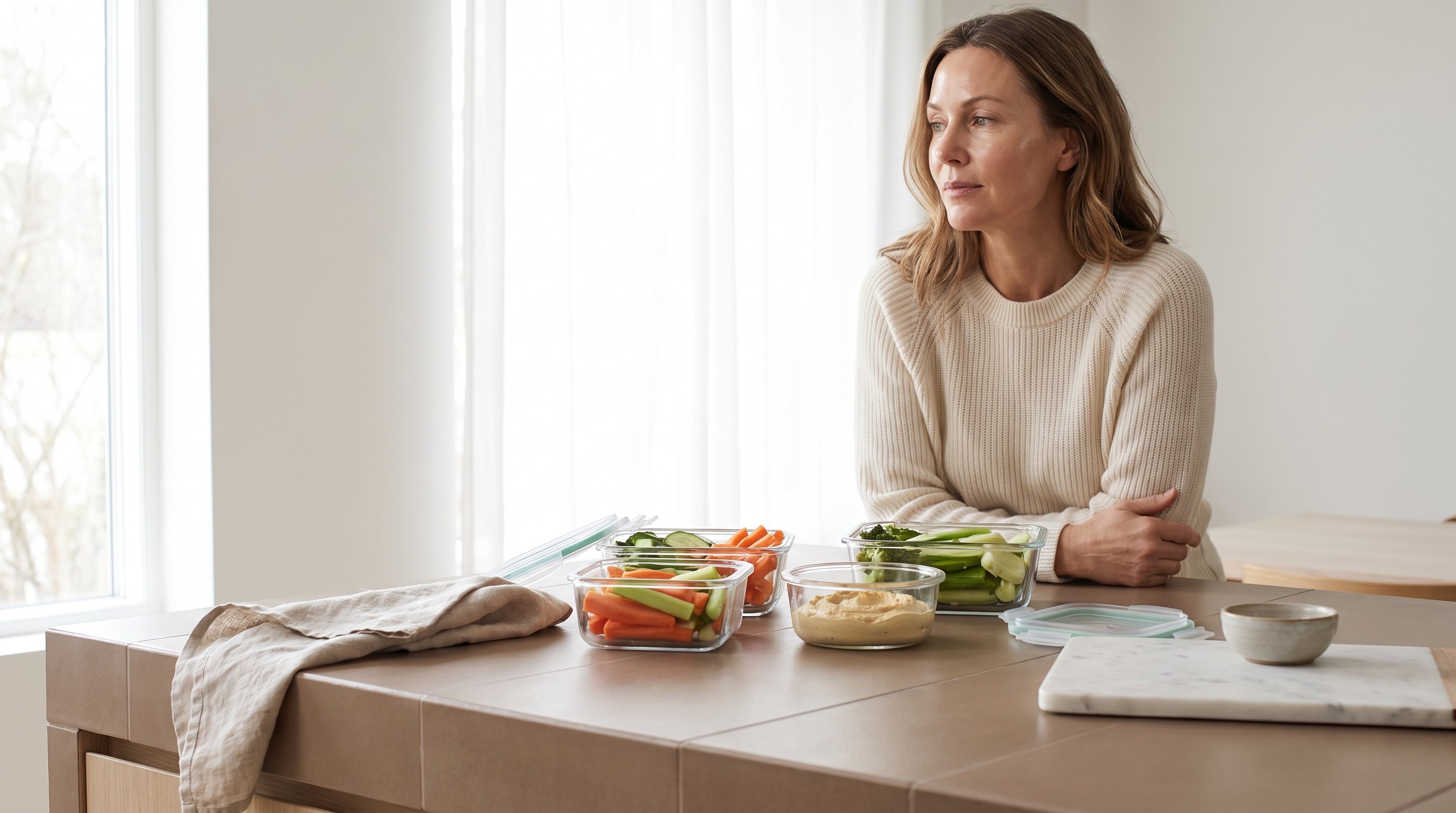
Do the arithmetic on a normal day: three fibre-light snacks might add up to 2-3g of fibre total, while three no-cook picks like carrots with hummus, mixed nuts and a pear could easily add up to 12-15g.
That difference is not dramatic on any single day, but stacked across a week it is a meaningfully different pattern of eating.
Why This Beats the Harder Alternative
A cooked, from-scratch snack plan sounds ideal until you are standing in a kitchen at 4pm with ten minutes and no energy for a saucepan.
No-cook fibre snacks remove the friction point entirely - there is no stove, no timing, no clean-up that talks you out of the healthier option.
The adherence argument matters more than the intensity argument here.
A snack you actually reach for four days a week beats a more elaborate one you make twice and abandon.
The Quantity Question
There is no single fibre number that fits everyone, but you can build a rough target from what you already eat.
Aim to get some fibre into each snack rather than treating it as a once-a-day event.
Find Your Own Number
Look at what you currently snack on across a normal day, then swap one low-fibre item for a no-cook high-fibre one and see how the day feels.
The table below is a starting point, not a rule - use it to compare options rather than to chase a perfect score.
| Snack | Fibre | Effort |
|---|---|---|
Apple with peanut butter | About 5g | Zero cook |
Carrots with hummus | About 5g | Zero cook |
Mixed nuts, small handful | About 3g | Zero cook |
Pear, whole | About 6g | Zero cook |
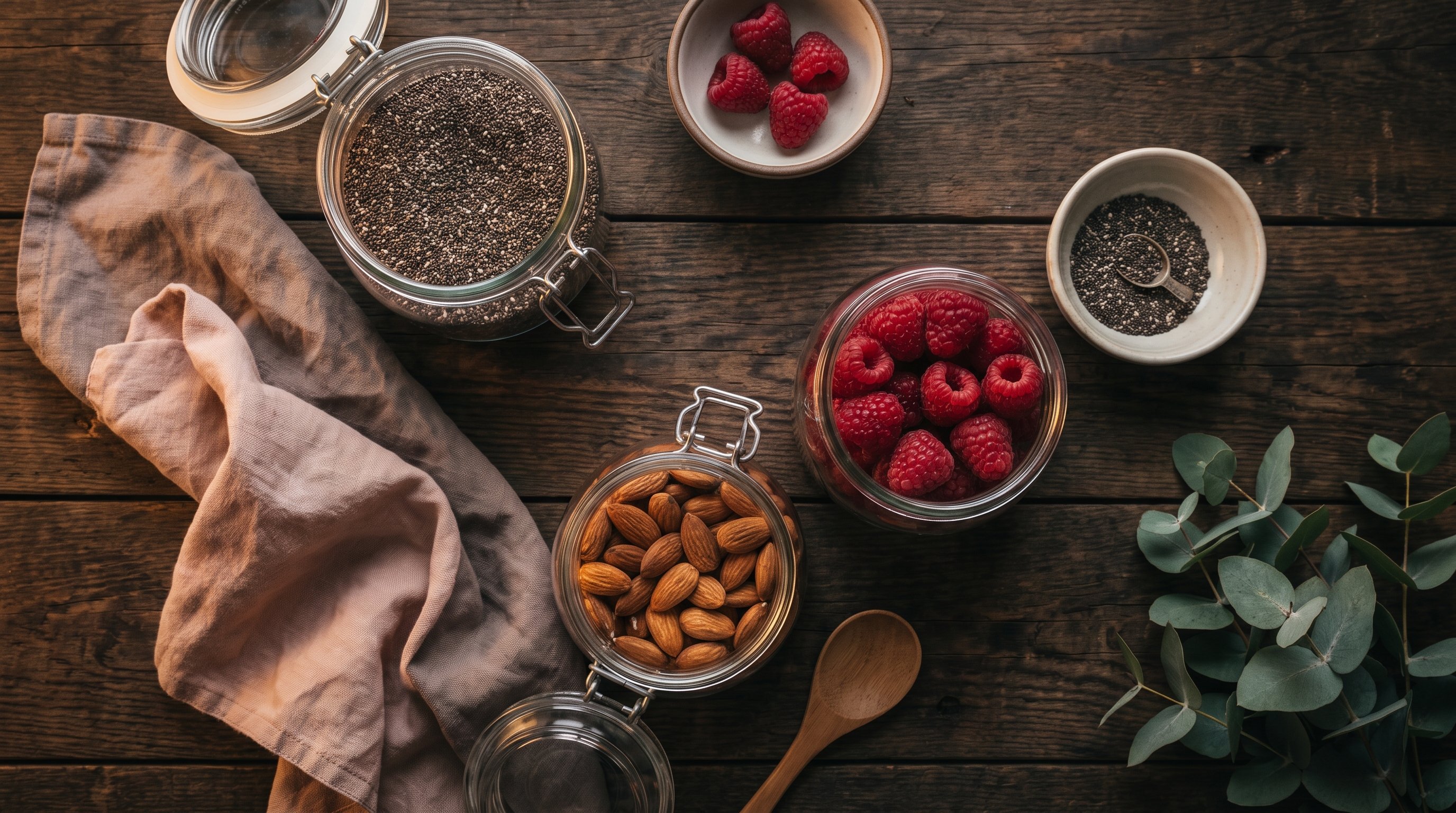
Chia pudding, pre-soaked | About 10g | Zero cook |
The Practical Question
Knowing the right snacks is one thing - remembering to actually pick them up instead of the biscuit tin is another.
This is where a routine helps more than willpower does, because a small daily prompt is easier to keep than a big intention.
Nord Yoga includes a meal plan built around food you already like, tailored for you around your skin goals, so fibre-rich, no-cook snacks can sit inside a plan rather than as one more thing to remember on your own.
Pairing that with the app's progress tracker means the snack habit and the face yoga habit get logged in the same place, which keeps both from quietly slipping.
Comparison: No-Cook Versus Cooked High-Fibre Snacks
The real decision most people are weighing is not fibre content - it is whether they will actually make the snack again tomorrow.
| Factor | No-Cook | Cooked |
|---|---|---|
Prep time | Under 2 minutes | 10-30 minutes |
Clean-up | Minimal | Pots and pans |
Shelf life | Several days | Often same day |
Fibre range | 3-10g typical | 3-10g typical |
Weekday realism | High | Lower on busy days |
The Forbidden Promise, Answered Honestly
No snack, however high in fibre, targets one area of the body or works overnight - that is simply not how digestion or appearance work.
Fibre supports how full and steady you feel across a day, and that is genuinely useful, but it does not reshape any single body part on its own.
The honest answer is that consistent small choices, repeated often, are what add up - there is no shortcut hiding inside any single snack.
Levers That Change the Result
If you want fibre swaps to actually matter, a few levers do more work than the others.
What Actually Moves the Needle
- Consistency over variety - the same three reliable no-cook snacks eaten most days beat a rotating list you never restock.
- Visibility in the kitchen - keeping fibre-rich snacks at eye level in the fridge or on the counter makes them the easy default.
- Pairing with an existing habit - stacking a snack swap onto something you already do daily, like a face yoga session, makes it stick faster than doing it in isolation.
How Long Until You See Results?
This is where a lot of people quit, because they expect a dramatic shift within days and it does not arrive on that schedule.
How you feel between meals tends to shift gradually as the habit settles in, not on any fixed timeline.
Give the swap a few weeks before judging it, and focus on whether you are reaching for the snack automatically rather than whether anything has changed overnight.
Your First Four Weeks
The order of changes matters more than the exact snacks you pick.
| Week | Focus | Action |
|---|---|---|
Week 1 | Swap one daily snack | Pick one easy no-cook option |
Week 2 | Stock the kitchen | Keep three options ready at all times |
Week 3 | Notice patterns | Track when hunger hits between meals |
Week 4 | Lock in the habit | Repeat the same two or three snacks daily |
What Stalls Progress
No Snacks in the House
If the only easy option is the biscuit tin, that is what gets eaten - restock fibre-rich options weekly so the default is already there.
Treating Fibre As a Once-A-Day Box to Tick
One high-fibre breakfast does not cover the rest of the day - spread fibre across two or three snacks instead of loading it all at once.
Chasing Variety Over Repetition
Constantly hunting for new recipes burns motivation fast - a short, boring rotation of three reliable snacks outlasts an ambitious list nobody sticks to.
No Link to an Existing Routine
A habit floating on its own is easy to forget - attach the snack swap to something you already do daily, like a skincare or movement routine.
Expecting a Fast, Visible Change
Judging the habit after three days sets it up to fail - give it weeks, and measure by whether you are still doing it, not by how you look.
Why Nord Yoga Works for This
Snack habits and skin-care habits both fail for the same reason: nothing reminds you to keep going once the initial motivation fades.
Nord Yoga pairs a tailored meal plan with guided face yoga sessions and a progress tracker, so the food side and the movement side of a routine live in one place instead of scattered across memory and good intentions.
Final Thoughts
No-cook high-fibre snacks are not complicated - a handful of nuts, a piece of fruit or hummus with vegetables all do the job without a single pan.
Start with one swap this week, keep it stocked, and let a tool like Nord Yoga help hold the rest of the routine steady alongside it.
FAQ
Anywhere from 3g to 10g per snack is a reasonable range to aim for, based on simple additions like nuts, fruit or hummus with vegetables. There is no need to hit an exact number every time - consistency across the week matters more than any single snack.
Fibre's main, well-understood job is slowing digestion and adding bulk, which is why it affects how full and steady you feel rather than anything more dramatic. It is one small piece of a wider eating pattern, not a fix on its own.
That is exactly the point of no-cook options - a piece of fruit or a handful of nuts takes seconds and needs no planning beyond having it in the house. Keeping two or three options stocked removes the need to think about it each day.
Most people stop because nothing else in their routine reinforces the habit once the initial motivation fades. Pairing the snack swap with something already tracked daily, like the routines and progress tracker inside Nord Yoga, gives it a better chance of sticking.
Share this post