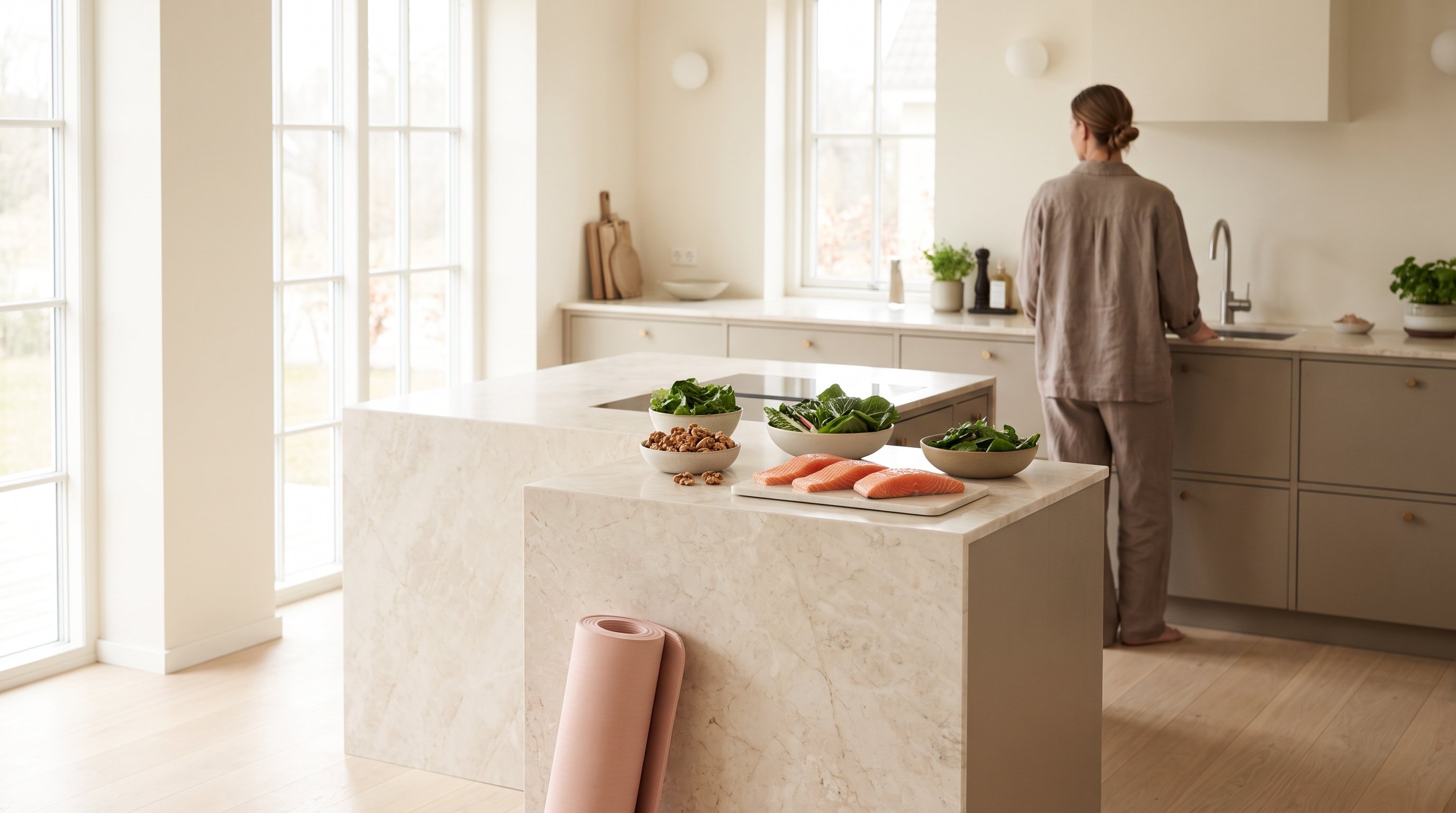
Recipes for Lymphatic Health: What to Cook From Scratch
By:Author:Nord Yoga Editorial
Updated on:September 30, 2026
- Does Eating for Lymphatic Health Actually Work?
- Why This Beats the Harder Alternative
- The Quantity Question: How Much, How Often
- The Practical Question: What Do You Actually Cook
- Comparison: Cooking From Scratch or Leaning on a Plan
- The Forbidden Promise, Answered Honestly
- Levers That Change the Result
- How Long Until You See Results?
- Your First Four Weeks
- What Stalls Progress
- Why Nord Yoga Works for This
- Final Thoughts
The lymphatic system moves fluid through roughly 600 lymph nodes, and what you eat can either help that fluid move or make it sluggish. Recipes built around water-rich produce, healthy fats and less sodium give the system less to fight against.
Lymph does not have a pump like the heart. It relies on muscle movement, hydration and fluid balance, so food choices that keep you hydrated and reduce excess sodium retention give the system an easier job.
This guide covers whether food really changes how the lymphatic system works, how much and how often to eat this way, a simple four-week plan, and where face yoga fits into the bigger picture.
Does Eating for Lymphatic Health Actually Work?
Lymphatic fluid is mostly water, so hydration status directly affects how easily it moves through the vessels and nodes. Meals heavy in sodium pull water into tissue spaces, which is part of why a salty dinner can leave you looking puffy the next morning.
The arithmetic is simple: a body holding on to excess sodium and too little water retains fluid in the spaces between cells. Swap that pattern for meals with more potassium-rich vegetables, more plain water and less processed sodium, and there is less fluid sitting around for the lymphatic system to clear.
None of this is a cure and it will not eliminate puffiness overnight. It is a shift in the raw material the body has to work with, meal by meal.
Why This Beats the Harder Alternative
A strict detox plan or a complicated multi-step recipe list sounds impressive, but it only works on the days you follow it exactly. Most people do not follow complicated plans for more than a week or two.
A short list of simple, repeatable meals - a big salad, a vegetable soup, a fruit-and-water habit - gets made again and again because it asks less of you. Repetition is what lets any dietary pattern actually influence fluid balance over time.
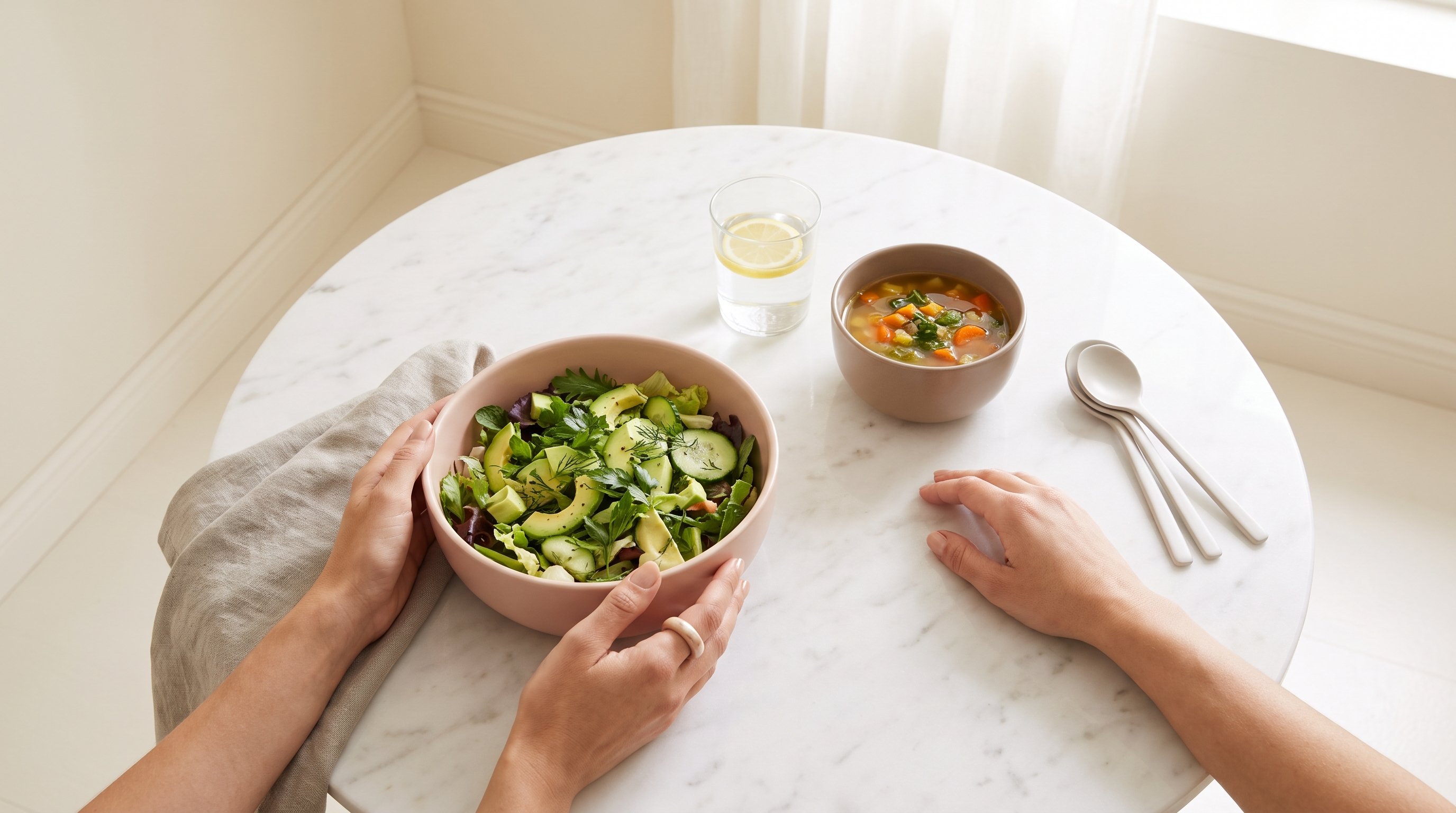
Think of it as thirty simple meals across a month versus five elaborate ones you abandon by day six. The simple version wins by sheer number of times it happens.
The Quantity Question: How Much, How Often
There is no single magic number, but a useful starting frame is one lymph-friendly meal a day, most days of the week, alongside consistent water intake.
Some people prefer to rebuild breakfast around this idea since it is the easiest meal to standardise. Others find it simpler to fix dinner, since that is often the meal with the most added sodium.
Find Your Own Number
Start with one meal a day built around vegetables, fruit and water, then notice which meal is easiest to repeat without thinking about it. That meal becomes the anchor you build the rest of the week around.
| Stage | Frequency | Focus |
|---|---|---|
Just starting | One meal daily | Vegetables and water |
Building habit | Two meals daily | Add fruit, cut sodium |
Established routine | Most meals | Whole foods, minimal processed |
The Practical Question: What Do You Actually Cook
In practice, lymph-friendly cooking is less about rare ingredients and more about a short rotation you can make without thinking: a citrus and leafy green salad, a vegetable-forward soup, a berry and water infusion, a simple stir-fry light on sauce and salt.
The hard part is rarely the recipe. It is remembering to plan the week and having the ingredients in the house before hunger makes the decision for you.
This is where a meal plan built around food you already like helps, because it removes the daily decision fatigue that causes people to fall back on quick, salty options. Nord Yoga includes an easy-to-follow meal plan feature tailored to your skin concerns, so the food side of the routine sits alongside guided face yoga sessions rather than being a separate project you have to manage on your own.
Comparison: Cooking From Scratch or Leaning on a Plan
Most people weigh up two paths: building lymph-friendly meals from scratch each week, or following a structured plan that removes the guesswork.
| Approach | Effort | Consistency |
|---|---|---|
From scratch weekly | High planning effort | Drops off fast |
Structured meal plan | Low daily effort | Easier to sustain |
Eating out often | Low effort, high sodium | Hard to control |
One repeated meal | Very low effort | Sustainable, narrow |
Mixed rotation | Moderate effort | Sustainable, varied |
There is no wrong answer here, only the one you will actually repeat next Tuesday.
The Forbidden Promise, Answered Honestly
No recipe targets fluid in one specific area of the face or body, and no meal plan gives an overnight change. The body does not let you choose where fluid clears from, and it does not clear on a fixed schedule.
What food can honestly do is reduce the overall load of sodium and dehydration the lymphatic system has to work against, meal after meal. That is a slower, whole-body process, not a spot fix.
Levers That Change the Result
Three factors matter more than any single recipe on this list.
What Actually Moves the Needle
- Consistent water intake - lymph fluid is mostly water, so steady hydration across the day matters more than any one meal.
- Sodium awareness - noticing where sodium hides in processed and restaurant food does more than any single detox recipe.
- Movement paired with meals - a short walk or light stretching after eating helps circulate fluid the same way muscle movement always has.
How Long Until You See Results?
This is where most people quit, expecting a visible change within days. Fluid balance responds to patterns repeated over weeks, not a single well-chosen meal.
Stay vague about the exact timeline and focus instead on the habit itself. The meal you repeat without thinking about it in week four is doing more than the perfect recipe you only made once.
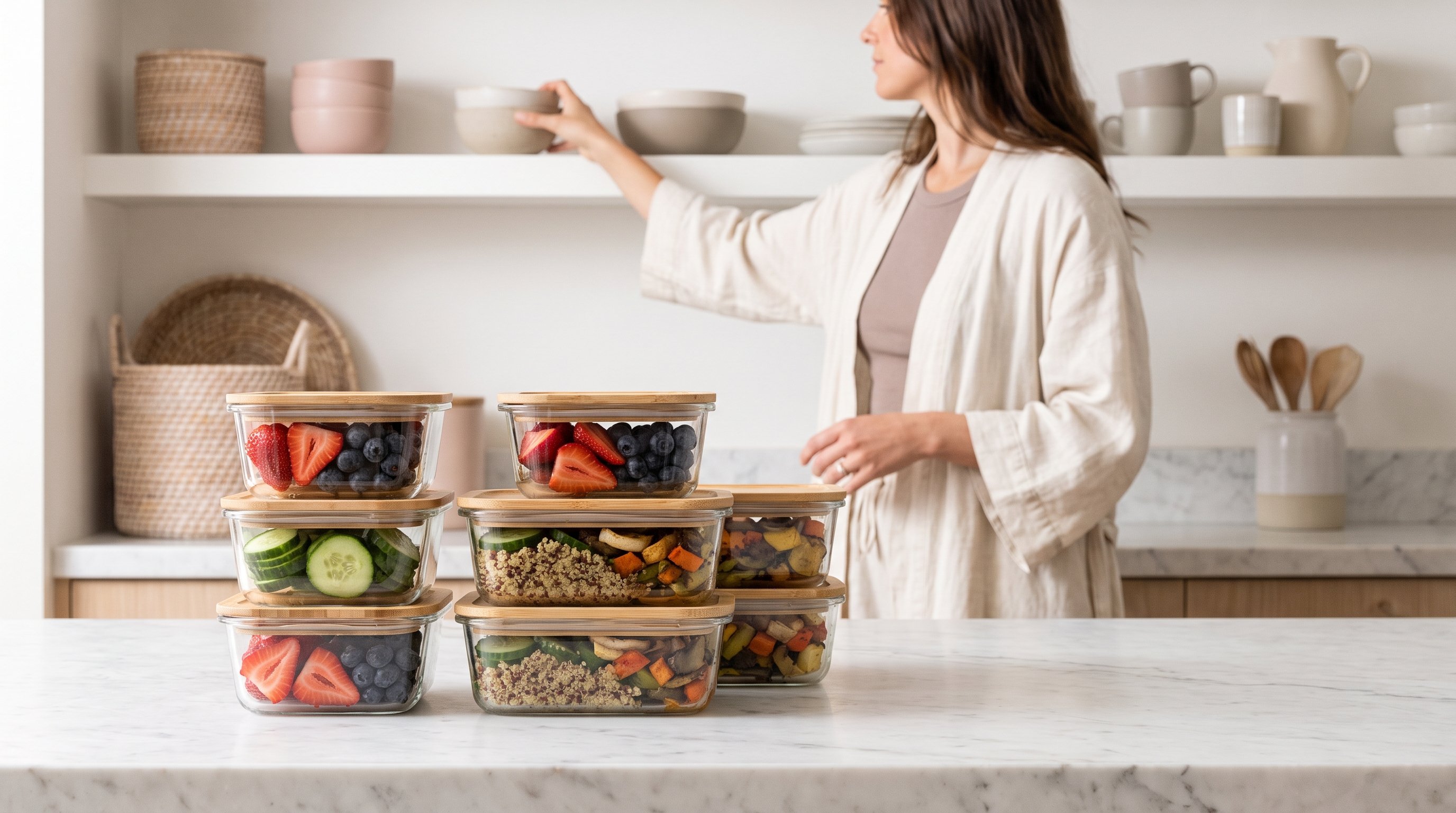
Your First Four Weeks
The order of these steps matters more than hitting every target perfectly.
| Week | Focus | Note |
|---|---|---|
Week 1 | Add one water-rich meal daily | Notice sodium in usual meals |
Week 2 | Swap processed snacks for fruit | Keep water intake steady |
Week 3 | Repeat two anchor meals | Add short post-meal walks |
Week 4 | Rotate three simple meals | Review what stuck naturally |
What Stalls Progress
Skipping Water on Busy Days
Hydration is the easiest thing to forget under pressure, and it is the thing that matters most. Keep a bottle in sight so drinking becomes automatic rather than a decision.
Hidden Sodium in Convenience Food
Sauces, bread and packaged snacks often carry more sodium than a home-cooked meal. Reading a label once for your usual go-to items tells you more than guessing.
Treating It As All-Or-Nothing
One salty meal does not undo a week of better choices. The pattern over a month matters far more than any single day.
No Plan for the Week Ahead
Without a rough plan, hunger picks the easiest option, which is rarely the lymph-friendly one. Ten minutes of planning on a Sunday avoids most of the week's slip-ups.
Why Nord Yoga Works for This
Food is one half of the picture, and movement is the other. Nord Yoga pairs its meal plan feature with guided face yoga sessions and light exercises, so the habit of eating well sits next to a daily routine rather than living as a separate task on a to-do list.
The app also tracks progress over time, which helps you see the four-week pattern rather than judging results off a single day. For anyone building a routine around lymphatic health, having the meal side and the movement side in one place removes a lot of the friction that causes people to give up.
Final Thoughts
Eating for lymphatic health is not about one clever recipe, it is about repeating simple, water-rich, lower-sodium meals often enough that they become the default. Start with one meal, keep water within reach, and let the pattern build from there.
If you want the food side and the face yoga side working together instead of managed separately, Nord Yoga gives you both in one place, with a tailored meal plan and guided sessions to match.
FAQ
Food supports fluid balance but it is not a fix, since the lymphatic system also depends on movement and hydration working together. Think of diet as one lever among several, not a standalone solution.
No, this is not about restrictive detoxing or eliminating food groups. It is about repeating simple, whole-food meals and cutting back on excess sodium, which is a sustainable pattern rather than a short-term cleanse.
Pick one or two anchor meals you can make on autopilot rather than aiming for variety every day. A repeated simple meal beats an ambitious plan you abandon by Wednesday.
Most people expect visible results within days, and fluid balance simply does not move that fast. Pairing the meal habit with a routine like Nord Yoga's guided sessions gives you something daily to track, which makes the slower food changes easier to stick with.
Share this post